Today's
EarthStation1.com 15% Off Commemorative Memorial Title: The Story
Of Civilization: Will & Ariel Durant DVD, MP3 Download, USB
Today, May 24, 2026
May 24, 2026 : 50 Days After Easter
Sunday: Religion: The History Of Religion: Abrahamic Religions:
Christianity: Eastertide (Eastertime, Easter Season, Paschaltide,
Paschaltime, Paschal Season): Pentecost (Pentecost Sunday, Whit
Sunday, Whitsunday, Whitsun): -- Pentecost occurs, the last day of
the Eastertide season, the Christian holiday which takes place on
the 49th day (50th day when inclusive counting is used) after
Easter. It commemorates the descent of the Holy Spirit upon the
Apostles of Jesus while they were in Jerusalem celebrating the
feast of Shavuot (Hebrew: "Weeks"), as described in the
Acts of the Apostles (Acts 2:1-31). Many churches, including the
Roman Catholic Church and Eastern Orthodox Church, believe the
Holy Spirit descended upon Mary, the mother of Jesus, at the same
time, as also recorded in the Acts of the Apostles (Acts 1:14).
Pentecost is one of the Great feasts in the Eastern Orthodox
Church, a Solemnity in the Roman Rite of the Catholic Church, a
Festival in the Lutheran Churches, and a Principal Feast in the
Anglican Communion. Many Christian denominations provide a special
liturgy for this holy celebration. Since its date depends on the
date of Easter, Pentecost is a "moveable feast". The
Monday after Pentecost is a legal holiday in many European,
African and Caribbean countries. On Sale @ 15% Off Discount Till
Midnight PT!
https://store.earthstation1.com/story-of-civilization-will-amp-ariel-durant-mp3-dvd-11-audiobo311.html
Today's
EarthStation1.com 15% Off Commemorative Memorial Title: Fibber
McGee And Molly Complete Radio Series MP3 DVD, Download, USB
Today, May 24, 2026
May 24: National Yucatan Shrimp Day: --
Celebrates a dish exploding with flavor! Plump, peel-and-eat
shrimp are the centerpiece of this dish, and the flavors remind
diners of sunny summer evenings. Shrimp lovers shouldn't miss out
on a dish like this. While the Yucatan Peninsula is further south
on the Gulf of Mexico, this recipe hails from the waters along
Florida's coast. The garlic, butter, and special Yucatan Sauce
with it's mellowed but characteristic Habanero peppers give it a
kick that keeps diners coming back for more. Serve it with crusty
bread and white wine or an icy cold beer. You can almost imagine
the dazzling blue waters of the Gulf and the sea breeze with every
bite. And don't forget the large, tender shrimp, too! You'll need
1lb shrimp, 8 oz of Yucatan Sauce (sold as Yucatan Sunshine
Habanero Pepper Sauce online), 8 tablespoons butter, 1 Lime
(optional for more zest!) and fresh cilantro. Boil the shrimp
until cooked through, then mix the bring the Yucatan sauce with
butter and bring them to a simmer, reduce heat, toss the cooked
shrimp into the sauce and garnish with cilantro! You can toast
your favorite type of bread for dipping in it, too! On Sale @ 15%
Off Discount Till Midnight PT!
https://store.earthstation1.com/fibber-mcgee-and-molly-mp3-dvd-complete-radio-serie3.html
Today's
EarthStation1.com 15% Off Commemorative Memorial Title: TV
Commercials: The Classics Vol. 4 DVD, Video Download, USB Drive
Today, May 24, 2026
May 24: National Asparagus Day: -- This
delicious and versatile vegetable can be pan-seared, fried, baked,
or grilled, and it is full of nutrients like fiber, folate, and
vitamins A, C, and E. It is best in the spring, making it the
perfect cookout veggie. Asparagus was an ancient vegetable. The
ancient Greeks and Romans used it as offerings dating back to 3000
BC. They used the Persian word 'asparag,' which meant a shoot or
sprout. The term 'sperage' became popular for many years and, in
the 16th century, we find the term 'sparagus' used in
English-speaking countries. Peasants called it 'sparrow grass.'
Asparagus was brought to North America by European settlers as
early as 1655. A Dutch immigrant to New Netherland, Adriaen van
der Donck, refers to asparagus in his description of Dutch farming
practices in the New World. This vegetable was also grown by
British immigrants. In 1685, an advertisement for Pennsylvania by
William Penn displaying a list of crops that grew well in the
American climate included asparagus. Currently, asparagus
production in the United States is mainly in three states:
California, Michigan, and Washington. In 2019, the national
average asparagus yield was around 4,076 pounds per acre and the
total asparagus production was 84.39 million pounds. Asparagus can
take three years to go from seed to harvest, but the plants will
produce spears for decades, making it a great crop. However, it is
quite labor-intensive, as farmworkers handpick each spear. They
carefully excavate around each spear to a depth of nine inches and
clip it at the base. That's a lot of work! Once seen as an
offering for the gods, asparagus continues to be celebrated today.
In 2019, Oceana County, Michigan celebrated its 46th National
Asparagus Festival. Asparagus is kind of a big deal! There are two
National Asparagus Days, the other being on April 23. Euell
Gibbons, outdoorsman and early health food advocate who became
famous for promoting eating wild foods during the 1960s,
capitalized on the growing return-to-nature movement in 1962, and
the resulting work, Stalking The Wild Asparagus, was an instant
success! On Sale @ 15% Off Discount Till Midnight PT!
https://store.earthstation1.com/tv-commercials-the-classics-vol-4-dv4.html
Today's
EarthStation1.com 15% Off Commemorative Memorial Title: Props And
Jets: Catapult Planes Wright Bros, V-1, Carriers DVD MP4 USB
Today, May 24, 2026
May 24: National Brother's Day: --
Today's a good day to call your brother and tell him you love him,
even though he'll say you're weird afterwards. When you were
younger, you argued over LEGOs or whose turn it was to sit in the
front seat. Yet in some strange way, those childhood squabbles
served to make you closer over the years. You love 'em, you hate
'em; they can often be your nemesis, especially when they poke fun
at you in front of your crush. But we know they'll pull through
for you when needed and they love you just as much as you love
them (although they may never admit it). "Sometimes being a
brother is even better than being a superhero."- Marc Brown,
author and illustrator of children's books. The word 'brother'
stems from the Latin root 'frater' and the Proto-Germanic word
'brothar,' which itself comes from the Proto-Indo-European root
'bhrater.' Regardless of origin, both in words and in blood, our
brothers have our backs over and over again. They're our closest
friends and, sometimes, the most annoying people we know. But we
love them anyway. Even some of the most famous people in history
had brothers to lean on and be annoyed by. Brother's Day has been
celebrated on May 24 since the year 2005. Although the exact
details of the holiday are unknown, it was Alabama-based C. Daniel
Rhodes who had first organized the holiday and its proceedings. In
some regions, National Brother's Day is an unofficial holiday. It
is not to be confused with National Siblings Day, which takes
place in April. You are lucky if you are blessed with having a
strong unbreakable bond with your brother. Fortunately, there are
other people who can sometimes fill the void of a brother in our
lives and serve as one to us, like a cousin, brother-in-law, or a
friend. In fact, everyone should have that one brotherly person in
their lives who they can count on for some sincere advice or who
can get them out of a pickle. For all their quirks and annoyances,
a brother is sometimes your best secret keeper and will never
expose you or leave you behind. Feel free to go all out on this
day with the mushy stuff in expressing your affection for your
brother and his importance in your life. Brotherhood is also very
strong among men. Whether it is a blood relation or not, men take
their 'bro code' VERY seriously. Really, there isn't much that can
ever come between a strong brotherhood in the long term. This
theme has inspired countless movies, books, paintings, plays, and
TV series like the aptly named "Band of Brothers."
History has many distinguished brother duos and groups. Stories
told by the Brothers Grimm are famous to this day, and advancement
in flying and aeronautics wouldn't have been possible without the
Wright brothers putting their minds together. National Brothers
Day is mostly observed in the United States, but many other
countries around the world also acknowledge the day. Australia,
Russia, Asian countries like India, and European countries like
France and Germany all celebrate brothers on May 24. "When
brothers agree, no fortress is so strong as their common life."
- Antisthenes, Greek philosopher and star pupil of Socrates. On
Sale @ 15% Off Discount Till Midnight PT!
https://store.earthstation1.com/props-and-jets-catapult-planes-dvd.html
Today's
EarthStation1.com 15% Off Commemorative Memorial Title: Cinderella
1957 Rodgers & Hammerstein Julie Andrews DVD Download USB
Today, May 24, 2026
May 24: Tiara Day: -- An international
holiday that celebrates empowering women and celebrate them for
their amazing contributions to the home and society. A tiara is a
piece of jewelry worn on the head of a woman that represents
intelligence and strength. Every woman deserves a crown for the
work that they do every day, and that is why Tiara Day was set
aside to remind women to celebrate themselves and for others to
appreciate all their hard work. Giving power to women benefits
society as a whole, as women are responsible for the continuation
and raising of future generations. Tiara Day has been observed
worldwide on May 24 since 2005. This special women-centered
holiday was founded by Barbara Bellissimo and the date was chosen
to coincide with the birthday of Queen Victoria. Everyone can wear
a tiara on Tiara Day. It has a way of making you feel like
royalty. A tiara is an ornamental crown; it is usually made of
precious metals and adorned with jewels. Women wear them on formal
occasions and they are most common among socialites and royalty.
There are plastic costume jewelry tiaras that can be worn to
proms, weddings, homecomings, beauty pageants, and quinceaneras.
Tiaras are symbols of strength and power; this makes it the
perfect holiday to encourage women's empowerment. In ancient
times, both men and women wore tiaras to show their high status.
The headdress worn by Persian Kings were called 'tiaras,' but the
Romans and ancient Greeks also wore wreath-shaped head ornaments.
Tiaras became less prevalent as the Roman Empire declined. Tiaras
came back in the late eighteenth century but were mostly worn by
women. They became very popular when Napoleon gave his wife
Josephine de Beauharnais several tiaras. The largest and most
valuable collection of tiaras in the world is owned by Queen
Elizabeth II; these tiaras have been worn by the queen on many
state occasions, and many of the tiaras were inherited from other
queens. Tiaras are now usually worn by queens, princesses, and
empresses. They are popularly worn by the royalty of the Dutch,
Swedish, Danish, and Spanish. On Sale @ 15% Off Discount Till
Midnight PT!
https://store.earthstation1.com/cinderella-1957-rodgers-amp-hammerstein-julie-andrews-dvd-download1957.html
Today's
EarthStation1.com 15% Off Commemorative Memorial Title: United
Nations Documentaries Set: 2 MP4 Downloads Or 2 DVDs
Today, May 24, 2026
May 24: International Women's Day For
Peace And Disarmament: -- A day to celebrate women's voices for a
world free from the threat of nuclear arms. We celebrate
diplomacy, human decency, and a violence-free, peaceful future.
For generations, the only real part that women were allowed to
play in armed conflict was that of the grieving women left behind,
while their sons, husbands, and brothers went off to war. The
establishment of this Day marks a significant change in women's
role in the conflict. They are now eager to step out and have
their voices heard. This day is also about spreading awareness of
the terror of nuclear weapons. In the early 1980s, a group of
pro-pacifist feminists from around Europe decided to lend their
voice to the already loud cries demanding to disarm nuclear
stockpiles and military forces around the world. In 1985, the
total number of active nuclear warheads, globally, was
approximately 62,000. On May 24, International Women's Day for
Peace and Disarmament was established. Since the 1980s, May 24 has
become a rallying cry for pacifist and human rights groups around
the world to call on governments to stop the manufacture and
distribution of arms, whether that be to their own militaries or
private citizens within their own countries. The movement has
grown and evolved over the years, but its core purpose is to stand
up and demand an end to violence, in all shapes and forms. As
governments appear to prioritize weaponry and military
advancements over human safety. A lot of controversies still reign
over the need to safeguard our planet from nuclear weapons. The
need to celebrate this day today is just as important as it was in
the 1980s. On Sale @ 15% Off Discount Till Midnight PT!
https://store.earthstation1.com/united-nations-documentaries-set-dvd-mp4-download-usb-driv4.html
Today's
EarthStation1.com 15% Off Commemorative Memorial Title: Goons
Running Jumping Standing Still Mukkinese Battle-Horn DVD MP4 USB
Today, May 24, 2026
May 24: World Schizophrenia Awareness
Day: -- A day dedicated to raising awareness of the mental illness
that affects over 20 million people worldwide. Schizophrenia is
highly stigmatized since it's not talked about and lacks accurate
representation in the media. World Schizophrenia Awareness Day was
created to fight against stigma and to make it easier for people
to seek different resources to get help. It lifts the lid on the
challenges that thousands of people with Schizophrenia - from all
over the world - have to contend with every day of their lives.
Schizophrenia is a mental disorder characterized by persistent
psychotic symptoms such as auditory and/or visual hallucinations,
delusional thinking, dissociation from reality, and disorganized
thoughts and behavior. It usually begins to manifest when the
patient is in their early twenties, although, in rare cases,
symptoms can show in early childhood. This disorder affects about
24 million people in the world. Cases with descriptions associated
with schizophrenics began to be recorded in the 1700s; this
disease has been around since early civilization. It was only
registered and recognized in the early 1900s when psychiatrist
Eugen Bleuler coined the name schizophrenia. However, proper
treatment following legitimate humane medical procedures was only
adopted around 1980, when appropriate antipsychotic medication was
introduced and there had already been a revolution in psychiatric
treatment in general. Schizophrenia is a treatable disorder and,
in some cases, even curable. With the proper medication and
psychotherapy, patients have shown improvement. Many people still
don't reach out for help. Some who do reach out tend to suffer
stigma due to their condition rather than receive care. That's why
World Schizophrenia Awareness Day was started so that patients and
their families and friends, plus everyone around the world can
learn more about the disorder and know how to help if necessary.
On Sale @ 15% Off Discount Till Midnight PT!
https://store.earthstation1.com/goons-running-jumping-standing-still-mukkinese-battlehorn-dvd-mp4-us4.html
Today's
EarthStation1.com 15% Off Commemorative Memorial Title: The Story
Of Civilization: Will & Ariel Durant DVD, MP3 Download, USB
Today, May 24, 2026
May 24, 15 BC: #BOTD: #HBD! Germanicus,
ancient Roman general, known for his campaigns in Germania (d.
October 10, 19) is #born Germanicus Julius Caesar in Rome, Italy,
the son of Nero Claudius Drusus and Antonia the Younger, into an
influential branch of the patrician gens Claudia. Germanicus's
praenomen (personal name) is unknown, but he was probably named
Nero Claudius Drusus after his father (conventionally called
"Drusus"), or possibly Tiberius Claudius Nero after his
uncle. He took the agnomen (nickname) "Germanicus",
awarded posthumously to his father in honor of his victories in
Germania, at which point he nominally became head of the family in
9 BC. In AD 4, he was adopted by his paternal uncle Tiberius, who
succeeded Augustus as Roman emperor a decade later. As a result,
Germanicus became an official member of the gens Julia, another
prominent family, to which he was related on his mother's side.
His connection to the Julii was further consolidated through a
marriage between himself and Agrippina the Elder, a granddaughter
of Augustus. He was also the father of Caligula, the maternal
grandfather of Nero, and the older brother of Claudius. During the
reign of Augustus, Germanicus enjoyed an accelerated political
career as the heir of the emperor's heir, entering the office of
quaestor five years before the legal age in AD 7. He held that
office until AD 11, and was elected consul for the first time in
AD 12. The year after, he was made proconsul of Germania Inferior,
Germania Superior, and all of Gaul. From there he commanded eight
legions, about one-third of the entire Roman army, which he led
against the Germanic tribes in his campaigns from AD 14 to 16. He
avenged the Roman Empire's defeat in the Teutoburg Forest and
retrieved two of the three legionary eagles that had been lost
during the battle. In AD 17, he returned to Rome, where he
received a triumph before leaving to reorganise the provinces of
Asia Minor, whereby he incorporated the provinces of Cappadocia
and Commagene in AD 18. As a famous general, Germanicus was widely
popular and regarded as the ideal Roman long after his death. To
the Roman people, Germanicus was the Roman equivalent of Alexander
The Great due to the nature of his death at a young age, his
virtuous character, his dashing physique, and his military renown.
Germanicus died in Antioch, Roman Syria aged 33 under dubious
circumstances. While in the eastern provinces, he came into
conflict with the governor of Syria, Gnaeus Calpurnius Piso.
During their feud, Germanicus became ill in Antioch and died, a
death has been attributed to poison by ancient sources, but that
was never proven. Germanicus had made his way to Egypt, arriving
to a tumultuous reception that January. He gone there to relieve a
famine in the country, and their produce was vital to Rome's food
supply. This move upset the Roman Emperor Tiberius, because it had
violated an order by Augustus that no senator should enter the
province without consulting the emperor and the Senate (Egypt was
an imperial province, and thus belonged to the emperor).
Germanicus had entered the province in his capacity as proconsul,
but had done so without first seeking permission from Tiberius to
do so. He returned to Syria by summer, where he found that Piso
had either ignored or revoked his orders to the cities and legions
there. Germanicus in turn ordered Piso's recall to Rome, although
this action was probably beyond his authority. In the midst of
this feud, Germanicus became ill and despite the fact Piso had
removed himself to the port of Seleucia, he was convinced that
Piso was somehow poisoning him. Tacitus reports that there were
signs of black magic in Piso's house with hidden body-parts and
Germanicus's name inscribed on lead tablets. Germanicus sent Piso
a letter formally renouncing their friendship (amicitia);
Germanicus died soon thereafter. His death aroused much
speculation, with several sources blaming Piso, acting under
orders from Emperor Tiberius. As the death of Germanicus occurred
during their feud most people suspected him of having poisoned
Germanicus, although this was never proven. The armed attempt by
Piso to regain control of Syria immediately after the death of
Germanicus only aroused more indignation. This, the rumors of him
poisoning Germanicus, and his conduct going back as far as his
governorship of Spain were all taken up by the delatores in their
accusations against him. It wasn't long before the matter was
taken to the Emperor. Tiberius was forced to order an
investigation, and after briefly hearing both sides, decided to
defer the case to the senate. Tiberius made no effort to conceal
his sentiments: the Pisones were longtime supporters of the
Claudians, with their support going back to the early days of
Octavian. A public trial was held, and Tiberius made allowances
for Piso to summon witnesses of all social orders, including
slaves, and he was given more time to plea than the prosecution,
but it made no difference: before the sentencing, Piso had
committed suicide, though Tacitus supposes that Tiberius may have
had him murdered, fearing his own implication in Germanicus'
death, and stated that Tiberius was involved in a conspiracy
against Germanicus, and that Tiberius's jealousy and fear of his
nephew's popularity and increasing power was the true motive. The
death of Germanicus in dubious circumstances greatly affected
Tiberius's popularity in Rome, leading to the creation of a
climate of fear in Rome itself. Also suspected of connivance in
his death was Tiberius's chief advisor, Sejanus, who would, in the
20s, create an atmosphere of fear in Roman noble and
administrative circles by the use of treason trials and the role
of delatores, or informers. Germanicus is buried in The Mausoleum
Of Augustus, Rome, Citta Metropolitana Di Roma Capitale, Lazio,
Italy. On Sale @ 15% Off Discount Till Midnight PT!
https://store.earthstation1.com/story-of-civilization-will-amp-ariel-durant-mp3-dvd-11-audiobo311.html
Today's
EarthStation1.com 15% Off Commemorative Memorial Title: Native
North American Indian History Documentaries MP4 Downloads DVDs
Today, May 24, 2026
May 24, 1607: The Colonial History Of The
United States: The British Colonization Of The Americas: The
Colony Of Virginia: The Jamestown, Virginia Colony (1607-1624): --
100 English settlers disembark in Jamestown, Virginia, the
earliest permanent English settlement in the Americas, established
as an English colony ten days prior by the Virginia Company Of
London as "James Fort". It was established on the
northeast bank of the James River, about 2.5 mi (4 km) southwest
of the center of modern Williamsburg, and was considered permanent
after a brief abandonment in 1610. It followed several failed
attempts, including the Lost Colony of Roanoke, established in
1585 on Roanoke Island, later part of North Carolina. Jamestown
served as the colonial capital from 1616 until 1699. Despite the
dispatch of more settlers and supplies, including the 1608 arrival
of eight Polish and German colonists and the first two European
women, more than 80 percent of the colonists died in 1609-10,
mostly from starvation and disease. On April 5, 1614, Pocahontas,
a Native American woman notable for her association with the
colonial settlement at Jamestown, Virginia, married English
colonist John Rolfe in Virginia. Pocahontas (born Matoaka, known
as Amonute, c. 1596 - March 1617) was the daughter of Powhatan,
the paramount chief of a network of tributary tribal nations in
the Tsenacommacah, encompassing the Tidewater region of Virginia.
In mid-1610, the survivors abandoned Jamestown, though they
returned after meeting a resupply convoy in the James River. In
August 1619, the first recorded slaves from Africa to British
North America arrived in what is now Old Point Comfort near the
Jamestown colony, on a British privateer ship flying a Dutch flag.
The approximately 20 Africans from present-day Angola had been
removed by the British crew from the Portuguese slave ship Sao
Joao Bautista. They most likely worked in the tobacco fields as
slaves under a system of race-based indentured servitude. One of
their number included Angela, who was purchased by William Peirce.
The modern conception of slavery in the British colonies was
formalized in 1640 (the John Punch hearing) and was fully
entrenched in the Colony of Virginia by 1660. On March 22, 1622.
The Colony Of Virginia: The Indian Massacre Of 1622 (The Jamestown
Massacre) occurred when Algonquian indians killed 347 English
settlers around Jamestown, Virginia, a third of the colony's
population, during the Second Anglo-Powhatan War. one of three
wars fought between English settlers of the Virginia Colony and
Indians of the Powhatan Confederacy in the early seventeenth
century. The London Company's second settlement in Bermuda claims
to be the site of the oldest town in the English New World, as St.
George's, Bermuda, was officially established in 1612 as New
London, whereas James Fort in Virginia was not converted into
James Towne until 1619, and further did not survive to the present
day. In 1676, Jamestown was deliberately burned during Bacon's
Rebellion, though it was quickly rebuilt. In 1699, the colonial
capital was moved to what is today Williamsburg, Virginia;
Jamestown ceased to exist as a settlement, and remains today only
as an archaeological site, Jamestown Rediscovery. It is known for
its historical significance as the site of the first permanent
English settlement in America. The town is home to several museums
and historical sites, including the Jamestown Settlement and the
American Revolution Museum at Yorktown, which showcase the rich
history of the area. Today, Jamestown is one of three locations
composing the Historic Triangle of Colonial Virginia, along with
Williamsburg and Yorktown, with two primary heritage sites.
Historic Jamestowne[16] is the archaeological site on Jamestown
Island and is a cooperative effort by Jamestown National Historic
Site (part of Colonial National Historical Park) and Preservation
Virginia. Jamestown Settlement, a living history interpretive
site, is operated by the Jamestown Yorktown Foundation, a state
agency of the Commonwealth of Virginia. On Sale @ 15% Off Discount
Till Midnight PT!
https://store.earthstation1.com/native-north-american-indian-history-documentaries-dvd-mp4-us4.html
Today's
EarthStation1.com 15% Off Commemorative Memorial Title: New York
City History Documentary Collection MP4 Video Download DVD
Today, May 24, 2026
May 24, 1626: The Colonial History Of The
United States: Dutch Colonization Of The Americas: New Netherland
(Dutch: Nieuw Nederland, Latin: Novum Belgium): The History Of New
York City: The Dutch Purchase Of Manhattan (Peter Minuit's
Purchase Of Manhattan): -- Peter Minuit (Pieter Minuit, Pierre
Minuit, or Peter Minnewit [French: "Peter Midnight"])
buys Manhattan for the Dutch from the Lenape Native Americans. A
common myth states that Minuit purchased Manhattan for 24 USD
worth of trinkets; However, a letter written by Dutch merchant
Peter Schaghen to directors of the Dutch East India Company stated
that Manhattan was purchased "for the value of 60 guilders,"
an amount worth around 1,143 USD in 2020. Peter Minuit (b. between
1580 and 1585 - d. August 5, 1638) was a merchant from Tournai,
Wallonia in present-day Belgium. He was the 3rd Director of the
Dutch North American colony of New Netherland from 1626 until
1631, and 3rd Governor of New Netherland. He also founded the
Swedish colony of New Sweden on the Delaware Peninsula in 1638. On
Sale @ 15% Off Discount Till Midnight PT!
https://store.earthstation1.com/new-york-city-history-videos-3-dvd-se3.html
Today's
EarthStation1.com 15% Off Commemorative Memorial Title: The French
Revolution Series + Irish Rebellion & You Are There MP4 DVD
Today, May 24, 2026
May 24, 1743: #BOTD: Jean-Paul Marat,
Swiss-French physician, political theorist, journalist, scientist,
politician and revolutionary, best known for his role as a radical
journalist and politician during the French Revolution (d. July
13, 1793) is #born Jean-Paul Mara in Boudry, Prussian Principality
Of Neuchatel, (now The Republic And Canton Of Neuchatel, a mostly
French-speaking canton in western Switzerland). He became best
known for his role as a radical journalist and politician during
the French Revolution. His journalism became renowned for its
fierce tone, uncompromising stance towards the new leaders and
institutions of the revolution, and advocacy of basic human rights
for the poorest members of society, yet calling for prisoners of
the Revolution to be killed before they could be freed in what
became known as the September Massacres, a wave of killings in
Paris and other cities from 2-7 September 1792. He was one of the
most radical voices of the French Revolution. He became a vigorous
defender of the sans-culottes (French: literally "without
breeches", the common people of the lower classes),
publishing his views in pamphlets, placards and newspapers,
notably his periodical L'Ami du peuple (Friend of the People),
which helped make him their unofficial link with the radical,
republican Jacobin group that came to power after June 1793. Marat
died aged 50 in Paris, France by assassination when Marie-Anne
Charlotte de Corday d'Armont, known simply as Charlotte Corday, a
Girondist sympathizer (a political faction that campaigned for the
end of the monarchy, but then resisted the spiraling momentum of
the Revolution), stabbed him while he was taking a medicinal bath
for his debilitating skin condition with a five-inch kitchen knife
into his chest, where it pierced just under his right clavicle,
opening the brachiocephalic artery, close to the heart. The
massive bleeding was fatal within seconds. Slumping backwards,
Marat cried out his last words to his wife Simone, "Aidez-moi,
ma chere amie!" ("Help me, my beloved!") and died.
He is buried at Saint-Etienne-du-Mont Church in Paris. In death,
Marat became an icon to the Jacobins (the political faction then
in power in revolutionary France which was responsible for the
wave of executions known as The Reign Of Terro) as a revolutionary
martyr, as portrayed in Jacques-Louis David's famous painting, The
Death of Marat, considered to be the first modernist painting.
During her four-day trial, Charlotte Corday testified that she had
carried out the assassination alone, saying "I killed one man
to save 100,000." Four days later, on July 17, 1793, she was
executed by the guillotine in the Place de Greve wearing the red
overblouse denoting a condemned traitor who had assassinated a
representative of the people. Standing alone in the tumbril amid a
large and curious crowd she remained calm, although drenched by a
sudden summer rainfall. Her body was buried in the Madeleine
Cemetery in the 8th arrondissement of Paris, which was used to
dispose of the corpses of guillotine victims during the French
Revolution. The cemetery was named after Mary Magdalene. In 1847,
writer Alphonse de Lamartine gave Corday the posthumous nickname
"L'Ange De L'Assassinat (French: "The Angel Of
Assassination"). On Sale @ 15% Off Discount Till Midnight PT!
https://store.earthstation1.com/the-french-revolution-dvd-3-part-tv-documentary-serie3.html
Today's
EarthStation1.com 15% Off Commemorative Memorial Title: The Celts
TV Series On Celtic History & Culture DVD Download USB Drive
Today, May 24, 2026
May 24, 1798: The Age Of Enlightenment
(The Enlightenment, The Age Of Reason): The Age Of Revolution: The
Atlantic Revolutions: The French Revolution: The French
Revolutionary And Napoleonic Wars (The Great French War) (The
French Revolutionary Wars, The Napoleonic Wars): The Napoleonic
Wars: The Irish Rebellion Of 1798 (Irish: Eiri Amach 1798) (The
United Irishmen Rebellion [Irish: Eiri Amach Na nEireannach
Aontaithe], Ulster-Scots: The Hurries):: -- Inspired and assisted
by French revolutionaries, and led and organized against British
rule by The Society Of United Irishmen, The Irish Rebellion Of
1798, an uprising against British rule in Ireland lasting from May
24 to October 12, 1798 begins. The Society Of United Irishmen, a
republican revolutionary group influenced by the ideas of the
American and French revolutions, were the main organising force
behind the rebellion. The outbreak of war between Great Britain
and France in 1793, following both the succesful American
Revolutionary War and the execution of the French King Louis XVI,
forced the Society underground and toward armed insurrection, with
French aid. To augment their growing strength, the United Irish
leadership decided to seek military help from the French
revolutionary government and to postpone the rising until French
troops landed in Ireland. Theobald Wolfe Tone, leader of the
United Irishmen, travelled in exile from the United States to
France to press the case for intervention. The intimate nature of
the conflict meant that the rebellion at times took on the worst
characteristics of a civil war, especially in Leinster. Sectarian
resentment was fuelled by the remaining Penal Laws still in force.
Rumours of planned massacres by both sides were common in the days
before the rising and led to a widespread climate of fear.
Contemporary estimates put the death toll from 20,000 to as many
as 50,000 of which 2,000 were military and 1,000 loyalist
civilians. A significant number of modern historians argue that
these numbers are too high or too low. In support of some modern
research argues that these figures may be too high, a list of
British soldiers killed, compiled for a fund to aid the families
of dead soldiers, listed just 530 names; also, professor Louis
Cullen, through an examination of depletion of the population in
County Wexford between 1798 and 1820, put the fatalities in that
county due to the rebellion at 6,000. Historian Thomas Bartlett
therefore argues, "a death toll of 10,000 for the entire
island would seem to be in order". In support of the belief
that the death toll may be even higher than contemporary estimates
suggest as the widespread fear of repression among relatives of
slain rebels led to mass concealment of casualties. The popular
Irish ballad The Rising of the Moon recounts the loss of the
United Irishmen. Written as early as the 1860s, the song has been
since performed by many musicians, including The Dubliners. On
Sale @ 15% Off Discount Till Midnight PT!
https://store.earthstation1.com/the-celts-dvd-set-tv-series-all-6-shows-celtic-history-3-dis63.html
Today's
EarthStation1.com 15% Off Commemorative Memorial Title: Disraeli:
Portrait Of A Romantic TV Miniseries DVD Download USB Drive
Today, May 24, 2026
May 24, 1819: #BOTD: #HBD! Queen
Victoria, Queen Of The United Kingdom Of Great Britain And Ireland
beginning June 20 1837, Empress Of India beginning on May 1, 1876,
reigning until her death (d. January 22, 1901) is #born Princess
Alexandrina Victoria of Kent at Kensington Palace, London,
England, the daughter of Prince Edward, Duke of Kent and
Strathearn and the fourth son of King George III, and Princess
Victoria of Saxe-Coburg-Saalfeld who was born in Coburg, Bavaria,
Holy Roman Empire (Germany). Both the Duke of Kent and King George
III died in 1820, and Victoria was raised under close supervision
by her mother. She inherited the throne at the age of 18, after
her father's three elder brothers had all died, leaving no
surviving legitimate children. The United Kingdom was already an
established constitutional monarchy, in which the sovereign held
relatively little direct political power. Privately, Victoria
attempted to influence government policy and ministerial
appointments; publicly, she became a national icon who was
identified with strict standards of personal morality. Victoria
married her first cousin, Prince Albert Of Saxe-Coburg And Gotha,
in 1840. Their nine children married into royal and noble families
across the continent, tying them together and earning her the
sobriquet "the grandmother of Europe". After Albert's
death in 1861, Victoria plunged into deep mourning and avoided
public appearances. As a result of her seclusion, republicanism
temporarily gained strength, but in the latter half of her reign
her popularity recovered. On May 1, 1876, Victoria received the
additional title of Empress of India. Her Golden and Diamond
Jubilees were times of public celebration. Her reign of 63 years
and seven months was longer than that of any of her predecessors,
and is known as the Victorian era. It was a period of industrial,
cultural, political, scientific, and military change within the
United Kingdom, and was marked by a great expansion of the British
Empire. She was the last British monarch of the House Of Hanover.
Queen Victoria died at half past six in the evening at the age of
81 at Osborne House, Isle of Wight, England, after having reigned
for 64 years, the longest reign in British history until that
time. She is buried at The Royal Mausoleum, Frogmore on the
Frogmore estate within the Home Park at Windsor in Berkshire,
England. Her son and successor, Edward VII, initiated the House Of
Saxe-Coburg And Gotha, the line of his father. #QueenVictoria
#AlexandrinaVictoria #GrandmotherOfEurope #VictorianEra
#HouseOfHanover #HistoryOfTheUK #KingdomOfGreatBritain
#MonarchyOfTheUK #BritishMonarchy #BritishNobility #BritishHistory
#EnglishMonarchy #UKMonarchy #HouseOfSaxecoburgAndGotha
#HouseOfSaxeCoburgSaalfeld #EnglishHistory #HistoryOfGreatBritain
#HistoryOfEngland #BritishEmpire #QueensOfTheUK
#QueensOfGreatBritain #QueensOfIreland #EmpressOfIndia
#UnitedKingdom #UK #India #Pakistan #EmperorOfIndia #LaBelleEpoque
#MP4 #VideoDownload #DVD On Sale @ 15% Off Discount Till Midnight
PT!
https://store.earthstation1.com/disraeli-portait-of-a-romantic-tv-series-dvd-set-4-disc4.html
Today's
EarthStation1.com 15% Off Commemorative Memorial Title: Remember
When: It'll Never Fly w/ Dick Cavett Inventions DVD, MP4, USB
Today, May 24, 2026
May 24, 1844: The Industrial Revolution:
The First Industrial Revolution (1760 - c. 1840):
Telecommunications: Telegraphy: -- Samuel Morse sends the message
"What hath God wrought" (a biblical quotation, Numbers
23:23) from the Old Supreme Court Chamber in the United States
Capitol to his assistant, Alfred Vail, in Baltimore, Maryland, to
inaugurate the first telegraph line. The electrical telegraph, the
point-to-point text messaging system primarily used from the 1840s
until the late 20th century, was the first electrical
telecommunications system, and the most widely used of a number of
early messaging systems called telegraphs, that were devised to
communicate text messages quicker than physical transportation.
Electrical telegraphy can be considered to be the first example of
electrical engineering. Text telegraphy consisted of two or more
geographically separated stations, called telegraph offices. The
offices were connected by wires, usually supported overhead on
utility poles. Many different electrical telegraph systems were
invented, but the ones that became widespread fit into two broad
categories. The first category consists of needle telegraphs in
which a needle pointer is made to move electromagnetically with an
electric current sent down the telegraph line. Early systems used
multiple needles requiring multiple wires. The first commercial
system, and the most widely used needle telegraph, was the Cooke
and Wheatstone telegraph, invented in 1837. The second category
consists of armature systems in which the current activates a
telegraph sounder which makes a click. The archetype of this
category was the Morse system, invented by Samuel Morse in 1838.
In 1865, the Morse system became the standard for international
communication using a modified code developed for German railways.
Electrical telegraphs were used by the emerging railway companies
to develop train control systems, minimizing the chances of trains
colliding with each other. This was built around the signalling
block system with signal boxes along the line communicating with
their neighbouring boxes by telegraphic sounding of single-stroke
bells and three-position needle telegraph instruments. In the
1840s, the electrical telegraph superseded optical telegraph
systems, becoming the standard way to send urgent messages. By the
latter half of the century, most developed nations had created
commercial telegraph networks with local telegraph offices in most
cities and towns, allowing the public to send messages called
telegrams addressed to any person in the country, for a fee.
Beginning in 1850, submarine telegraph cables allowed for the
first rapid communication between continents. Electrical telegraph
networks permitted people and commerce to transmit messages across
both continents and oceans almost instantly, with widespread
social and economic impacts. Circa 1894, the electric telegraph
led to Guglielmo Marconi's invention of wireless telegraphy, the
first means of radiowave telecommunication. In the early 20th
century, manual telegraphy was slowly replaced by teleprinter
networks. Increasing use of the telephone pushed telegraphy into a
few specialist uses. Use by the general public was mainly special
occasion telegram greetings. The rise of the Internet and usage of
email in the 1990s largely put an end to dedicated telegraphy
networks. Telegraphy is the long-distance transmission of messages
where the sender uses symbolic codes, known to the recipient,
rather than a physical exchange of an object bearing the message.
Thus flag semaphore is a method of telegraphy, whereas pigeon post
is not. Ancient signalling systems, although sometimes quite
extensive and sophisticated as in China, were generally not
capable of transmitting arbitrary text messages. Possible messages
were fixed and predetermined and such systems are thus not true
telegraphs. The earliest true telegraph put into widespread use
was the optical telegraph of Claude Chappe, invented in the late
18th century. The system was used extensively in France, and
European nations occupied by France, during the Napoleonic era.
The electric telegraph started to replace the optical telegraph in
the mid-19th century. It was first taken up in Britain in the form
of the Cooke and Wheatstone telegraph, initially used mostly as an
aid to railway signalling. This was quickly followed by a
different system developed in the United States by Samuel Morse.
The electric telegraph was slower to develop in France due to the
established optical telegraph system, but an electrical telegraph
was put into use with a code compatible with the Chappe optical
telegraph. The Morse system was adopted as the international
standard in 1865, using a modified Morse code developed in Germany
in 1848. The heliograph is a telegraph system using reflected
sunlight for signalling. It was mainly used in areas where the
electrical telegraph had not been established and generally used
the same code. The most extensive heliograph network established
was in Arizona and New Mexico during the Apache Wars. The
heliograph was standard military equipment as late as World War
II. Wireless telegraphy developed in the early 20th century became
important for maritime use, and was a competitor to electrical
telegraphy using submarine telegraph cables in international
communications. Telegrams became a popular means of sending
messages once telegraph prices had fallen sufficiently. Traffic
became high enough to spur the development of automated
systems-teleprinters and punched tape transmission. These systems
led to new telegraph codes, starting with the Baudot code.
However, telegrams were never able to compete with the letter post
on price, and competition from the telephone, which removed their
speed advantage, drove the telegraph into decline from 1920
onwards. The few remaining telegraph applications were largely
taken over by alternatives on the internet towards the end of the
20th century. On Sale @ 15% Off Discount Till Midnight PT!
https://store.earthstation1.com/remember-when-it39ll-never-fly-dvd-technology-history-dick-cave39.html
Today's
EarthStation1.com 15% Off Commemorative Memorial Title: John Brown
Abolitionist Fanatic Documentary DVD MP4 Download USB Drive
Today, May 24, 2026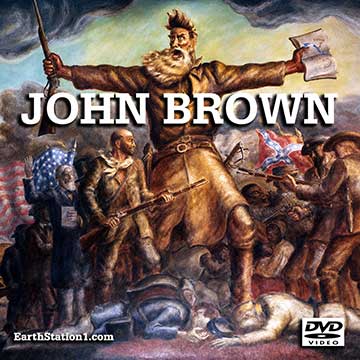
May 24, 1856: The Origins Of The American
Civil War (The Civil War, The War Between The States): Events
Leading To The American Civil War: Slavery: Slavery In The United
States: Landmark Court Decisions In The United States: Landmark
Supreme Court Of The United States (SCOTUS) Decisions: Dred Scott
v. Sandford:, The War Between The States): Events Leading To The
American Civil War: The Pottawatomie Massacre: -- John Brown and
his men kill five slavery supporters at Pottawatomie Creek,
Kansas, hacking some into pieces with much of it done in front of
their families. The Pottawatomie massacre occurred during the
night of May 24 and the morning of May 25, 1856. In reaction to
the sacking of Lawrence, Kansas by pro-slavery forces, John Brown
and a band of abolitionist settlers, some of them members of the
Pottawatomie Rifles, killed five settlers north of Pottawatomie
Creek in Franklin County, Kansas. This was one of the many bloody
episodes in Kansas preceding the American Civil War, which came to
be known collectively as Bleeding Kansas. Bleeding Kansas was
largely brought about by the Missouri Compromise and the
Kansas-Nebraska Act. #PottawatomieMassacre #JohnBrown
#PottawatomieRifles #PottawatomieCreek #Pottawatomie
#PottawatomieKansas #Abolition #Slavery #AmericanHistory
#USHistory #HistoryOfTheUS #WesternCulture #WesternCivilization
#OccidentalCulture #WesternWorld #WesternSociety #WesternTradition
#StoryOfCivilization #Terrorism #BleedingKansas
#MissouriCompromise #KansasNebraskaAct #SackingOfLawrence
#SiegeOfLawrence #MP4 #VideoDownload #DVD On Sale @ 15% Off
Discount Till Midnight PT!
https://store.earthstation1.com/john-brown-abolitionist-fanatic-documentary-dvd-mp4-download-usb-driv4.html
Today's
EarthStation1.com 15% Off Commemorative Memorial Title: The Boer
Wars: First Boer War & Second Boer War MP4 Video Download DVD
Today, May 24, 2026
May 24, 1870: #BOTD: #HBD! Jan Smuts,
South African statesman, military leader, and philosopher (d.
September 11, 1950) is #born Jan Christian Smuts at the Smuts
family farm, Bovenplaats, near Malmesbury, in the Cape Colony.
also known as the Cape of Good Hope, a British colony in
present-day South Africa. In addition to holding various cabinet
posts, Field Marshal Jan Christian Smuts (Baptismal Name: Jan
Christiaan Smuts) PC (Privy Council [UK]), OM (Order Of Merit
[Commonwealth]), CH (Order Of The Companions Of Honour
[Commonwealth]), DTD (Dekoratie Voor Trouwe Dienst [Afrikans:
Decoration For Devoted Service]), ED (Efficiency Decoration [South
Africa]), KC (King's Counsel [UK]), FRS (Fellow Of The Royal
Society [UK]) served as Prime Minister of the Union of South
Africa from 1919 until 1924 and from 1939 until 1948. In the
Second Boer War, Smuts led a Boer commando for the Transvaal.
During the First World War, he led the armies of South Africa
against Germany, capturing German South-West Africa. He then
commanded the British Army in East Africa. From 1917 to 1919 he
was also one of the members of the British Imperial War Cabinet,
and he was instrumental in the founding of what became the Royal
Air Force (RAF). He was appointed as a field marshal in the
British Army in 1941. He was the only person to sign both of the
peace treaties ending the First and Second World wars. A statue of
him was erected to commemorate him in London's Parliament Square.
Although Smuts had originally advocated racial segregation and
opposed the enfranchisement of black Africans, his views changed,
and he backed the Fagan Commission's findings that complete
segregation was impossible. Smuts subsequently lost the 1948
election to hard-line nationalists who institutionalised
apartheid. He continued to work for reconciliation and emphasised
the British Commonwealth's positive role until his death in 1950;
that year on May 29, a week after the public celebration of his
eightieth birthday in Johannesburg and Pretoria, Field Marshal
Smuts suffered a coronary thrombosis. He died of a subsequent
heart attack on his family farm of Doornkloof, Irene, near
Pretoria, South Africa. On October 11, 1899, The Boer Republics
declared war on the United Kingdom, beginning The Second Boer War
(The Boer War, The Anglo-Boer War, The South African War). In the
early stages of the conflict, Smuts served as South African and
Transvaal leader Paul Kruger's eyes and ears in Pretoria, handling
propaganda, logistics, communication with generals and diplomats,
and anything else that was required. In the second phase of the
war, from mid-1900, Smuts served under Koos de la Rey, who
commanded 500 commandos in the Western Transvaal. Smuts excelled
at hit-and-run warfare, and the unit evaded and harassed a British
army forty times its size. In 1899, Smuts interrogated the young
Winston Churchill, who had been captured by Afrikaners while
Churchill was a British soldier fighting against the Afrikaners
during the Boer War, which was the first time they met. The next
time was in 1906, while Smuts was leading a mission about South
Africa's future to London before Churchill, his former enemy, when
Chuchill was serving as Under-Secretary Of State For The Colonies.
The British Cabinet shared Churchill's sympathetic view, which led
to self-government within the year, followed by dominion status
for the Union of South Africa in 1910. Their association continued
in the First World War, when Lloyd George appointed Smuts, in
1917, to the war cabinet in which Churchill served as Munitions
Minister. By then, both had formed a fast friendship that
continued through Churchill's "wilderness years" and the
Second World War, to Smuts's death. Charles Wilson, 1st Baron
Moran, Churchill's personal physician, wrote in his diary: "Smuts
is the only man who has any influence with the PM; indeed, he is
the only ally I have in pressing counsels of common sense on the
PM. Smuts sees so clearly that Winston is irreplaceable, that he
may make an effort to persuade him to be sensible." Churchill
said of Smuts: "Smuts and I are like two old love-birds
moulting together on a perch, but still able to peck."
Smuts's importance to the Imperial war effort during World War II
was emphasised by a quite audacious plan, proposed as early as
1940, to appoint Smuts as Prime Minister Of The United Kingdom
should Churchill die or otherwise become incapacitated during the
war. This idea was put forward by Sir John Colville, Churchill's
private secretary, to Queen Mary and then to George VI, both of
whom warmed to the idea. On January 30, 1908, Colonial Secretary
Of South Africa Jan Smuts released Indian political and spiritual
leader Mahatma Gandhi from a South African prison after having
been tried and sentenced to two months in jail earlier in the
month. Though Gandhi and Smuts were ostensibly adversaries, they
had a deep mutual respect and admiration for each other; before
Gandhi returned to India in 1914, he presented General Smuts with
a pair of sandals (now held by the Ditsong National Museum of
Cultural History) made by Gandhi himself, of which in 1939 Smuts,
then Prime Minister of South Africa with a completely changed
point of view regarding race largely due to Gandhi's teachings,
wrote an essay for a commemorative work compiled for Gandhi's 70th
birthday, and returned the sandals with message "I have worn
these sandals for many a summer, even though I may feel that I am
not worthy to stand in the shoes of so great a man." On Sale
@ 15% Off Discount Till Midnight PT!
https://store.earthstation1.com/the-boer-wars-first-boer-war-amp-second-boer-war-mp4-video-download-dv4.html
Today's
EarthStation1.com 15% Off Commemorative Memorial Title: 'Neath
Brooklyn Bridge 1942 Bowery Boys DVD, MP4 Download, USB Drive
Today, May 24, 2026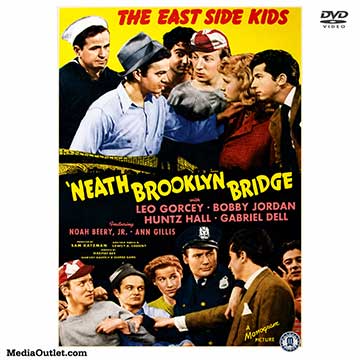
May 24, 1883: Grand Openings: Bridge
Openings: New York City (New York, NYC): Bridges And Tunnels In
New York City: Suspension Bridges: The Brooklyn Bridge (The New
York And Brooklyn Bridge, The East River Bridge): -- Fourteen
years after construction began on January 3, 1870 in New York
City, what is now called The Brooklyn Bridge, a hybrid
cable-stayed/suspension bridge, is opened to traffic, the longest
suspension bridge in the world at the time of its opening (with a
main span of 1,595.5 feet [486.3 m] and a deck 127 ft [38.7 m]
above mean high water) as well as the first fixed crossing of the
East River, spanning between the boroughs of Manhattan and
Brooklyn. It was originally called either The New York And
Brooklyn Bridge or The East River Bridge, but it was officially
renamed the Brooklyn Bridge in 1915. Proposals for a bridge
connecting Manhattan and Brooklyn were first made in the early
19th century, which eventually led to the construction of the
current span, designed by John A. Roebling. The project's chief
engineer, his son Washington Roebling, contributed further design
work, assisted by the latter's wife, Emily Warren Roebling.
Construction started in 1870, with the Tammany Hall-controlled New
York Bridge Company overseeing construction, although numerous
controversies and the novelty of the design prolonged the project
over thirteen years. Since opening, the Brooklyn Bridge has
undergone several reconfigurations, having carried horse-drawn
vehicles and elevated railway lines until 1950. To alleviate
increasing traffic flows, additional bridges and tunnels were
built across the East River. Following gradual deterioration, the
Brooklyn Bridge has been renovated several times, including in the
1950s, 1980s, and 2010s. The Brooklyn Bridge is the southernmost
of the four toll-free vehicular bridges connecting Manhattan
Island and Long Island, with the Manhattan Bridge, the
Williamsburg Bridge, and the Queensboro Bridge to the north. Only
passenger vehicles and pedestrian and bicycle traffic are
permitted. A major tourist attraction since its opening, the
Brooklyn Bridge has become an icon of New York City. Over the
years, the bridge has been used as the location of various stunts
and performances, as well as several crimes and attacks. The
Brooklyn Bridge has been designated a National Historic Landmark,
a New York City landmark, and a National Historic Civil
Engineering Landmark. On Sale @ 15% Off Discount Till Midnight PT!
https://store.earthstation1.com/39neath-brooklyn-bridge-east-side-kids-bowery-boys-movie-d39.html
Today's
EarthStation1.com 15% Off Commemorative Memorial Title: Manfred
von Richthofen The Red Baron & WWI Aviation DVD, Download, USB
Today, May 24, 2026
May 24, 1887: #BOTD: #HBD! Mick Mannock,
Irish-British flying ace in the Royal Flying Corps and Royal Air
Force during the First World War, one of the most decorated men in
the British Armed Forces, recipient of The Military Cross twice,
one of the rare three-time recipients of The Distinguished Service
Order, and posthumous Victoria Cross recipient (d. July 26, 1918)
is #born Edward Corringham Mannock in Ballincollig, County Cork,
Ireland to Julia (nee Sullivan) and Edward Mannock, of English,
Irish and Scottish descent. Edward Corringham Mannock VC, DSO and
Two Bars, MC and Bar, was a pioneer of fighter aircraft tactics in
aerial warfare. At his death he had amassed 61 aerial victories,
the fifth highest scoring pilot of the war. Mannock was born in
1887 to an English father, Edward Mannock, and an Irish mother.
Mannock's father served in the British Army and the family moved
to India when Mannock was a small child. Mannock was sickly and
developed several ailments in his formative years. Upon his return
to England he became a fervent supporter of Irish nationalism and
the Irish Home Rule movement but became a member of the
Independent Labour Party where he satisfied his interest in
politics. In 1914 Mannock was working as a telephone engineer in
Turkey. After the Ottoman Empire's entry into the war on the side
of the Central Powers he was interned. Mannock was badly treated
and soon fell ill. Turkish authorities repatriated him to Britain
believing him to be unfit for war service. Mannock recovered and
joined the Royal Engineers and then Royal Army Medical Corps. He
moved services again and in 1916 joined Royal Flying Corps (RFC).
After completing his training he was assigned to No. 40 Squadron
RFC. Mannock went into combat on the Western Front participating
three separate combat tours. After a slow start he began to prove
himself as an exceptional pilot, scoring his first victory on 7
May 1917. By February 1918 Mannock had achieved 16 victories and
was appointed Flight Commander of No. 74 Squadron. He amassed 36
more victories from 12 April-17 June 1918. After returning from
leave Mannock was appointed commanding officer of No. 85 Squadron
in July 1918, and scored nine more victories that month. Days
after warning fellow ace George McElroy about the hazards of
flying low into ground fire, that same fate befell Mannock and he
was killed in action dogfighting too close to the ground. He is
buried at The Arras Flying Services Memorial in Arras, Departement
Du Pas-De-Calais, Nord-Pas-De-Calais, France. On Sale @ 15% Off
Discount Till Midnight PT!
https://store.earthstation1.com/red-baron-dvd-world-war-i-aerial-warfare-documentaries.html
Today's
EarthStation1.com 15% Off Commemorative Memorial Title: Sam
Giancana Chicago Outfit Mob Boss Biography MP4 Video Download DVD
Today, May 24, 2026
May 24, 1908: #BOTD: Sam Giancana, American mobster who was boss of the Chicago Outfit from 1957 to 1966 (d. June 19, 1975) is #born Gilormo Giangana in Chicago's West Town neighborhood of Smith Park, an Italian immigrant community known as "The Patch", to Antonio Giangana and Antonia DeSimmona from Castelvetrano, Sicily, Italy, Salvatore Mooney Giancana ("Mooney" for "Looney", meaning "Crazy") joined the 42 Gang (Forty-Two Gang) teenage street gang started during Prohibition, and developed a reputation in organized crime which gained him the notice of the leaders of the Chicago Outfit, which he joined during the late 1930s. He was rejected from service in the United States Army by his local draft board for being a psychopath. From the 1940s through the 1950s, he controlled the illegal gambling, illegal liquor distribution, and political rackets in Louisiana. In the early 1940s, Giancana was involved in Chicago's African-American lottery payout system for the Outfit, after having ousted Giancana's African American prison mate and lottery chief, Eddie Jones. In 1957, he became the boss of the Chicago Outfit. Giancana and the Mafia are reputed to have been involved in John F. Kennedy's victory in the 1960 presidential election. During the 1960s, he was recruited by the Central Intelligence Agency (CIA) in a plot to assassinate Cuban leader Fidel Castro. Giancana along with Mafia leaders Santo Trafficante Jr. and Carlos Marcello are reputed to have been directly involved with the assassination of of John F. Kennedy. In 1965, Giancana was convicted of contempt of court, serving one year in prison. After his release from prison, Giancana fled to Cuernavaca, Mexico. In 1974, he was deported to the United States, returning to Chicago. Sam Giancana died when he was murdered in Oak Park, Illinois, shortly before he was scheduled to testify before the Church Committee regarding his work for the CIA regarding the Castro assassination plots. He is buried at Mount Carmel Catholic Cemetery in Hillside, Illinois. On Sale @ 15% Off Discount Till Midnight PT! https://store.earthstation1.com/samgichoumob.html
Today's
EarthStation1.com 15% Off Commemorative Memorial Title: Trolley:
The Cars That Built Our Cities DVD, Video Download, USB Drive
Today, May 24, 2026
May 24, 1910: Great Inventions: -- Walter
M. Hard, a young African American barber from Hope, Maryland,
invents and patents a device to improve trolley car service
enormously. Hard's device made it almost impossible for the
electrical contact on top of a car to slip off the overhead wire.
It eliminated the many wasteful delays trolley car riders suffered
whenever the contact slipped and the trolley car stopped dead.
That device continues to be used by electric trains that utilize
overhead wires to this day. On Sale @ 15% Off Discount Till
Midnight PT!
https://store.earthstation1.com/trolley-the-cars-that-built-our-cities-history-of-us-light-rail.html
Today's
EarthStation1.com 15% Off Commemorative Memorial Title: World War
1 TV Series With Robert Ryan DVD, Video Download, USB Drive
Today, May 24, 2026
May 24, 1915: The European Civil War:
World War I: The First European War (The European Theater Of World
War I): World War I Treaties: The Treaty Of London (Italian:
Trattato Di Londra) (The Pact Of London [Italian: Patto Di
Londra], Officially "Agreement Between France, Russia, Great
Britain And Italy. Signed At London April 26, 1915"): --
Having joined with the Allies the day prior in fulfullment of the
Treaty Of London, Italy declares war on Austria-Hungary. The
London Pact was a secret pact signed in London on April 26, 1915
by the United Kingdom Of Great Britain And Ireland, The French
Third Republic, The Russian Empire, and The Kingdom Of Italy. Its
intent was to gain the alliance of Italy against its former
allies, including the German Empire and Austria-Hungary. The main
lure was promising large swaths of Austria-Hungary to the north of
Italy and to the east across the Adriatic. Britain also promised
funding. Italy promised to enter the war the next month. The
Allies could easily outbid Austria-Hungary and thereby won a
military alliance with 36 million Italians. The secret provisions
were published by the Bolsheviks when they came to power in Russia
in late 1917. On Sale @ 15% Off Discount Till Midnight PT!
https://store.earthstation1.com/world-war-1-robert-ryan-4-dual-layer-dvds-26-episode-tv-se1426.html
Today's
EarthStation1.com 15% Off Commemorative Memorial Title: Frieda:
David Farrar Glynis Johns Mai Zetterling Flora Robson MP4 DVD
Today, May 24, 2026
May 24, 1925: #BOTD: #HBD! Mai
Zetterling, Swedish actress, novelist, film director, beauty and
sex symbol (d. March 17, 1994) is #born Mai Elisabeth Zetterling
in Vasteras, Sweden to a working class family. She started her
career as an actress at the age of 17 at Dramaten, the Swedish
national theatre, appearing in war-era films. Zetterling appeared
in film and television productions spanning six decades from the
1940s to the 1990s. Her breakthrough came in the 1944 film Torment
written by Ingmar Bergman, in which she played a controversial
role as a tormented shopgirl. Shortly afterwards she moved to
England and gained instant success there with her title role in
Basil Dearden's Frieda (1947) playing opposite David Farrar. After
a brief return to Sweden in which she worked with Bergman again in
his film Music in Darkness (1948), she returned to Britain and
starred in a number of UK films, playing against such leading men
as Tyrone Power, Dirk Bogarde, Richard Widmark, Laurence Harvey,
Peter Sellers, Herbert Lom, Richard Attenborough, Keenan Wynn,
Stanley Baker and Dennis Price. Some of her notable films as an
actress include Quartet (1948), a film based on some of W.
Somerset Maugham's short stories, The Romantic Age (1949) directed
by Edmond T. Greville, Only Two Can Play (1962) co-starring Peter
Sellers and directed by Sidney Gilliat, and The Witches (1990), an
adaptation of Roald Dahl's book directed by Nicolas Roeg. Having
gained a reputation as a sex symbol in dramas and thrillers, she
was equally effective in comedies, and was active in British
television in the 1950s and 1960s. She began directing and
publishing novels and non-fiction in the early 1960s, her films
starting with political documentaries and a short film titled The
War Game (1962), which was nominated for a BAFTA award, and won a
Silver Lion at Venice. Her first feature film Alskande par (1964,
"Loving Couples"), based on the novels of Agnes von
Krusenstjerna, was banned at the Cannes Film Festival for its
sexual explicitness and nudity. Kenneth Tynan of The Observer
later called it "one of the most ambitious debuts since
Citizen Kane". It was not the only film she made that caused
controversy for its frank sexuality. When critics reviewing her
debut feature stated that "Mai Zetterling directs like a
man," she began to explore feminist themes more explicitly in
her work. The Girls, which had an all-star Swedish cast that
included Bibi Andersson and Harriet Andersson, discussed women's
liberation (or lack thereof) in a society controlled by men, as
the protagonists compare their lives to characters in the play
Lysistrata, and find that things have not progressed very much for
women since ancient times. In 1966, she appeared as a storyteller
on the BBC children's programme Jackanory, and in five episodes
narrated Tove Jansson's Finn Family Moomintroll. Zetterling was
married to Norwegian actor Tutte Lemkow from 1944 to 1953. They
had a daughter, Etienne and a son, Louis, who is professor of
environmental sociology at the Autonomous University of Barcelona.
In her autobiography All Those Tomorrows, published in 1985,
Zetterling details love affairs with actor Herbert Lom and Tyrone
Power, with whom she lived from 1956 until early 1958. From 1958
to 1976, she was married to British author David Hughes, who
collaborated with her on her first films as director. The couple
were friends with the composer Michael Hurd, who wrote the music
scores for Flickorna and Scrubbers. Documents at the National
Archives in London show that, as a member of the Hollywood Left,
she was watched by British security agents as a suspected
Communist. However, the UK never had a system along the lines of
the American Hollywood Blacklist. A year after her final role on
television, Zetterling died from cancer at the age of 68 in her
home in London. Her remains were cremated, and her ashes were
scattered at her home in Mont Blanc, France. On Sale @ 15% Off
Discount Till Midnight PT!
https://store.earthstation1.com/frieda-dvd-post-wwii-drama-flora-robson-mai-zetterling.html
Today's
EarthStation1.com 15% Off Commemorative Memorial Title: TV
Commercials: The Cable Age Classics III DVD, Download, USB Drive
Today, May 24, 2026
May 24, 1937: The Interwar Period (The
Aftermath Of World War I, The Interbellum, Between The Wars): The
Presidency Of Franklin D. Roosevelt: The Great Depression: The
Great Depression In The United States: The New Deal: The Second
New Deal (1935-1936): The Social Security Act (The Social Security
Act Of 1935): -- The Supreme Court rules The Social Security Act
Of 1935 constitutional in two cases: Steward Machine Co. v. Davis,
and Helvering v. Davis. The Social Security Act of 1935 is a law
enacted by the 74th United States Congress and signed into law by
U.S. President Franklin D. Roosevelt on August 14, 1935. The law
created the Social Security program as well as insurance against
unemployment. The law was part of Roosevelt's New Deal domestic
program. By 1930, the United States was one of the few
industrialized countries without any national social security
system. Amid the Great Depression, the physician Francis Townsend
galvanized support behind a proposal to issue direct payments to
older people. Responding to that movement, Roosevelt organized a
committee led by Secretary of Labor Frances Perkins to develop a
major social welfare program proposal. Roosevelt presented the
plan in early 1935 and signed the Social Security Act into law on
August 14, 1935. The law established the Social Security program.
The old-age program is funded by payroll taxes, and over the
ensuing decades, it contributed to a dramatic decline in poverty
among older people, and spending on Social Security became a
significant part of the federal budget. The Social Security Act
also established an unemployment insurance program administered by
the states and the Aid to Dependent Children program, which
provided aid to families headed by single mothers. The law was
later amended by acts such as the Social Security Amendments of
1965, which established two major healthcare programs: Medicare
and Medicaid. Steward Machine Company v. Davis, 301 U.S. 548
(1937), was a case in which the U.S. Supreme Court upheld the
unemployment compensation provisions of the Social Security Act of
1935, which established the federal taxing structure that was
designed to induce states to adopt laws for funding and payment of
unemployment compensation. The decision signaled the Court's
acceptance of a broad interpretation of Congressional power to
influence state laws. The primary challenges to the Act were based
on the argument that it went beyond the powers granted to the
federal government in the U.S. Constitution and that it involved
coercion of the states that called for a surrender by the states
of powers essential to their quasi-sovereign existence, in
contravention of the Constitution's Tenth Amendment. Helvering v.
Davis, 301 U.S. 619 (1937), was a decision by the U.S. Supreme
Court that held that Social Security was constitutionally
permissible as an exercise of the federal power to spend for the
general welfare and so did not contravene the Tenth Amendment of
the U.S. Constitution. The Court's 7-2 decision defended the
constitutionality of the old-age benefit program of the Social
Security Act of 1935 by requiring only welfare spending to be for
the common benefit, as distinguished from some mere local purpose.
It affirmed a District Court decree that held that the tax upon
employees was not properly at issue and that the tax upon
employers was constitutional. On Sale @ 15% Off Discount Till
Midnight PT!
https://store.earthstation1.com/tv-commercials-the-cable-age-classics-iii-dvd.html
Today's
EarthStation1.com 15% Off Commemorative Memorial Title: Fibber
McGee And Molly Complete Radio Series MP3 DVD, Download, USB
Today, May 24, 2026
May 24, 1938: The Automobile: The History
Of The Automobile: Street Furniture: The Parking Meter: -- The
first working parking meter is patented by Oklahoma City, Oklahoma
lawyer and newspaper publisher Carl C. Magee patents the parking
meter, who had commissioned Oklahoma State University engineering
professors Holger George Thuesen and Gerald A. Hale to designed
it. Named "The Black Maria", it had first been installed
on July 16, 1935 in Oklahoma City, Oklahoma. Parking meters are
used to collect money in exchange for the right to park a vehicle
in a particular place for a limited amount of time. They are used
by municipalities as a tool for enforcing their integrated
on-street parking policy, usually related to their traffic and
mobility management policies, but are also used for revenue. They
are a form of Street Furniture, a collective term for objects and
pieces of equipment installed along streets and roads for various
purposes, which includes benches, traffic barriers, bollards, post
boxes, phone boxes, streetlamps, traffic lights, traffic signs,
parking meters, bus stops, tram stops, taxi stands, public
lavatories, fountains, watering troughs, memorials, public
sculptures, and waste receptacles. An early patent for a parking
meter was filed by Roger W. Babson, on August 30, 1928. The meter
was intended to operate on power from the battery of the parking
vehicle and required a connection from the car to the meter.
Industrial production started in 1936 and expanded until the
mid-1980s. The first models were based on a coin acceptor, a dial
to engage the mechanism, and a visible pointer and flag to
indicate the expiration of the paid period. This configuration
lasted more than 40 years, with only a few changes in the exterior
design, such as a double-headed design (to cover two adjacent
parking spaces) and the incorporation of new materials and
production techniques. M.H. Rhodes Inc. of Hartford, Connecticut
started making meters for Mark-Time Parking Meter Company of
Miami, where the first Rhodes meters were installed in 1936. These
were different from the Magee design because only the driver's
action of turning a handle was necessary to keep the spring wound.
At the same time, Magee's meters needed a serviceman to wind the
spring occasionally. Upon insertion of coins into a currency
detector slot or swiping a credit card or smartcard into a slot,
and turning a handle (or pressing a key), a timer is initiated
within the meter. Some locations now allow payment by mobile phone
(to remotely record payments for subsequent checking and
enforcement). A dial or display on the meter indicates the time
remaining. In many cities, all parking meters are designed to use
only one type of coin. Use of other coins will fail to register,
and the meter may cease to function altogether. For example, in
Hackensack, New Jersey, all parking meters are designed for
quarters only. In 1960, New York City hired its first crew of
"meter maids"; all were women. It was not until 1967
that the first man was hired. In the mid-1980s, a digital version
was introduced, replacing the mechanical parts with electronic
components: boards, keyboards, and displays. This allowed the
meter more flexibility, as an EEPROM chip can be reconfigured more
easily than corresponding mechanical components. By the beginning
of the 1990s, millions of parking meter units had been sold
worldwide. Still, the market was already looking into new
solutions, like the collective pay and display machines and new
forms of payment that appeared along with electronic money and
communication technologies. More modern parking meters are
generically called multi-space meters (as opposed to single-space
meters) and control multiple spaces per block (typically 8-12) or
lots (unlimited). While with these meters, the parker may have to
walk several car lengths to the meter, there are significant
customer service, performance, and efficiency benefits. Multispace
meters incorporate more customer-friendly features such as
on-screen instructions and acceptance of credit cards for
payment-no longer do drivers have to have pockets full of coins.
While they may still be prone to coin jams and other types of
vandalism, most of these meters are wireless and can report
problems immediately to maintenance staff, who can then fix the
meters so they are not out of service for very long. With
pay-by-space meters, the driver parks in a space, goes to the
meter, enters the space number, and makes payment. The meter
memorizes the time remaining, and enforcement personnel press the
bay buttons to check for violations. Other advances in parking
meters include vehicle detection technology, which allows the
pay-by-space meters to know when a car is parked in a space. This
opens the door for benefits for parking managers, including
providing way-finding (directing drivers to unoccupied spaces via
the web or street signs), enabling remote violation detection, and
gathering vital statistics about parking supply and demand. Some
meters allow payment for additional time by phone and notify
drivers when they are about to expire. Parking meters in Santa
Monica use vehicle detectors to prevent drivers from "feeding
the meter" indefinitely, and to delete remaining time when a
car departs so the next car cannot take any time without paying.
Meters in Madrid give discounted and free parking to drivers of
hybrid and electric vehicles, respectively. Drivers can reserve
meters spots in Los Angeles by cellphone. Another advancement with
parking meters is the new solar-powered meters that accept credit
cards and still coins. Credit card enabled solar powered "smart"
single-space meters were installed in Los Angeles in 2010, and
Mayor Antonio Villaraigosa stated "the city's Department of
Transportation had projected the 10,000 Coin & Card parking
meters installed over the last six months would generate 1-1.5
million in revenue each year". These parking meters replace
the top of the meter, but use the existing pole, and use solar
power, which can help with sending technicians a wireless signal
when in need for repair. DDOT (the District of Columbia Department
of Transportation) states that this new parking meter will
provide: "better return on tax payer's investment, a variety
of options, reduced maintenance, a variety of easy payment
options, and increased reliability". New digital meters now
account for all of New York City's 62,000 single-space parking
meters, which are more accurate and difficult to break into. New
York City retired its last spring-loaded, single-space, mechanical
parking meter at West 10th Street and Surf Avenue in Coney Island
on December 20, 2006. "The world changes. Just as the
[subway] token went, now the manual meter has gone," said
Iris Weinshall, the city's transportation commissioner, at a small
ceremony marking the occasion, the New York Times reported. On
Sale @ 15% Off Discount Till Midnight PT!
https://store.earthstation1.com/fibber-mcgee-and-molly-mp3-dvd-complete-radio-serie3.html
Today's
EarthStation1.com 15% Off Commemorative Memorial Title: Choppers:
Helicopter History TV Documentary Series DVD, Download, USB
Today, May 24, 2026
May 24, 1940: Aviation: The History Of
Aviation: The History Of The Helicopter: -- The first successful
single main rotor helicopter flight takes place in Bridgeport,
Connecticut when the Vought-Sikorsky VS-300 rises 15-20 feet above
the ground, travels 200 feet forward before hovering, backs up and
lands, piloted by its inventor Igor Sikorsky, Ukrainian-American
engineer, academic, founder Sikorsky Aircraft, and aviation
pioneer in both helicopters and fixed-wing aircraft. The Sikorsky
VS-300's original design and subsequent improvements can be seen
in most modern helicopters. After years of experimenting in
aviation, Sikorsky had originally submitted a patent for his
"direct lift aircraft" design in 1931, which he received
in 1935 (patent 1,994,488). Four year later, the VS-300 made its
first tethered flight on September 14, 1939, before achieving its
historic first free flight on May 24, 1940; later that year,
Sikorsky was awarded Connecticut helicopter license No. 1. As the
VS-300 continued to improve, Sikorsky performed a water landing
and takeoff and broke the world endurance record by staying aloft
for 1 hour, 32 minutes, and 26.1 seconds, both in 1941. Sikorsky
modified the Vought-Sikorsky VS-300 design into the Sikorsky R-4,
which became the world's first mass-produced helicopter in 1942.
On Sale @ 15% Off Discount Till Midnight PT!
https://store.earthstation1.com/choppers-complete-13-part-tv-series-4-dvd-134.html
Today's
EarthStation1.com 15% Off Commemorative Memorial Title: Stalin:
The Red Tsar TV Series + Soviet Assassins MP4 Download DVD Set
Today, May 24, 2026
May 24, 1940: The Interwar Period (The
Interbellum, Between The Wars): The Soviet Union (The Union Of
Soviet Socialist Republics, USSR): The History Of The Soviet
Union: Mass Repression In The Soviet Union: Stalinism: The
Assassination Plots Of Joseph Stalin: Assassination Attempts On
Leon Trotsky: -- Exiled Russian revolutionary Leon Trotsky
survives an unsuccessful assassination attempt in Coyoacan, Mexico
orchestrated by NKVD agent Iosif Grigulevich ordered by Soviet
leader Joseph Stalin. Iosif Romualdovich Grigulevich (May 5, 1913
- June 2, 1988) was a Soviet NKVD Operative between 1937 and 1953,
when he took a leading role in assassinating Communist and
Bolshevik individuals who were not loyal to Joseph Stalin. Under a
false identity as Teodoro B. Castro, a wealthy Costa Rican
expatriate living in Rome, Grigulevich served as the ambassador of
the Republic of Costa Rica to both Italy and Yugoslavia
(1952-1954). His mission as an agent was to assassinate Yugoslav
leader Josip Broz Tito but was later aborted by Stalin's death in
1953. Grigulevich then settled in Moscow, where he worked as an
expert on the history of Latin America and on the Roman Catholic
Church. He was a member of the Soviet Academy of Sciences, served
as editor-in-chief of the magazine Obshchestvennye nauki i
sovremennost ("Social Sciences Today"), and published
many books and articles about Latin American subjects. In January
1940 he was sent to Mexico, under the code name "Yuzek,"
to take part in the first attempt on the life of Leon Trotsky,
again with Agent Vidali. In the wee hours of May 24, 1940, a group
of peasants and miners, led by Grigulevich and David Siqueiros,
stormed Trotsky's compound at Coyoacan near Mexico City. In terms
of harm, they missed Trotsky and his wife altogether and managed
only to wound their young grandson in the foot. Defector Walter
Krivitsky managed to hear of this attempt and sent a warning to
Trotsky through Dies Committee member J.B. Matthews. Trotsky
acknowledged the warning. In a letter, he responded, "Krivitsky
is right. We are the two men the OGPU (the secret police of the
Soviet Union from 1923 to 1934) is sworn to kill.". After the
failed attempt to assassinate Trotsky, Grigulevich and two of his
accomplices (Laura Araujo Aguilar and Antonio Pujol Jimenez) were
helped by Pablo Neruda to escape from the Mexican police. On Sale
@ 15% Off Discount Till Midnight PT!
https://store.earthstation1.com/stalin-the-red-tsar-dvd-complete-4-part-tv-series-2-dis42.html
Today's
EarthStation1.com 15% Off Commemorative Memorial Title: Sink The
Bismarck! (1960) WWII Naval Docudrama DVD, MP4, USB Drive
Today, May 24, 2026
May 24, 1941: The European Civil War: World War II: The Second European War (The European Theater Of World War II): The Battle Of The Atlantic: -- Operation Rheinubung (German: "Exercise Rhine"): The Battle Of The Denmark Strait: -- The British battleship HMS Prince Of Wales and the battlecruiser HMS Hood battle the German battleship Bismarck and the heavy cruiser Prinz Eugen to prevent them from executing Operation Rheinuebung, the break out by these German ships into the North Atlantic to attack Allied merchant shipping. During the battle, the German Battleship Bismarck sinks then-pride of the Royal Navy, HMS Hood, killing all but three crewmen. HMS Hood (pennant number 51) was the last battlecruiser built for the Royal Navy. Commissioned in 1920, she was named after the 18th-century Admiral Samuel Hood. One of four Admiral-class battlecruisers ordered in mid-1916, Hood had design limitations, though her design was revised after the Battle of Jutland and improved while she was under construction. For this reason she was the only ship of her class to be completed. Despite the appearance of new and more modern ship designs over time, Hood remained the largest and most powerful warship in the world for twenty years after her commissioning and her prestige was reflected in her nickname "The Mighty Hood". Bismarck was the first of two Bismarck-class battleships built for Nazi Germany's Kriegsmarine. Named after Chancellor Otto von Bismarck, the ship was laid down at the Blohm and Voss shipyard in Hamburg in July 1936 and launched in February 1939. Work was completed in August 1940, when she was commissioned into the German fleet. Bismarck and her sister ship Tirpitz were the largest battleships ever built by Germany, and two of the largest built by any European power. On Sale @ 15% Off Discount Till Midnight PT! https://store.earthstation1.com/sink-the-bismarck-dvd-wwii.html
Today's
EarthStation1.com 15% Off Commemorative Memorial Title: Eat The
Document (1966) Bob Dylan DVD, MP4 Video Download, Flash Drive
Today, May 24, 2026
May 24, 1941: #BOTD: #HBD! Bob Dylan,
American singer-songwriter, guitarist, artist, writer, painter and
producer, Nobel Prize laureate is #born Robert Allen Zimmerman in
St. Mary's Hospital in Duluth, Minnesota. Bob Dylan has been an
influential figure in popular music and culture for more than five
decades. Much of his most celebrated work dates from the 1960s,
when he became a reluctant "voice of a generation" with
songs such as "Blowin' in the Wind" and "The Times
They Are a-Changin'" that became anthems for the Civil Rights
Movement and anti-war movement. In 1965, he controversially
abandoned his early fan-base in the American folk music revival,
recording a six-minute single, "Like a Rolling Stone",
which enlarged the scope of popular music. Dylan's lyrics
incorporate a wide range of political, social, philosophical, and
literary influences. They defied existing pop-music conventions
and appealed to the burgeoning counterculture. Initially inspired
by the performances of Little Richard and the songwriting of Woody
Guthrie, Robert Johnson, and Hank Williams, Dylan has amplified
and personalized musical genres. In his recording career, Dylan
has explored many of the traditions in American song - from folk,
blues, and country to gospel, and rock and roll, and from
rockabilly to English, Scottish, and Irish folk music, embracing
even jazz and the Great American Songbook. Dylan performs on
guitar, keyboards, and harmonica. Backed by a changing lineup of
musicians, he has toured steadily since the late 1980s on what has
been dubbed "the Never Ending Tour". His accomplishments
as a recording artist and performer have been central to his
career, but his songwriting is considered his greatest
contribution. Following his self-titled debut album in 1962, which
mainly consisted of traditional folk songs, Dylan made his
breakthrough as a songwriter with the release of the 1963 album
The Freewheelin' Bob Dylan, featuring "Blowin' in the Wind"
and the thematically complex composition "A Hard Rain's
a-Gonna Fall," alongside several other enduring songs of the
era. Dylan went on to release the politically charged The Times
They Are a-Changin' and the more lyrically abstract and
introspective Another Side of Bob Dylan in 1964. In 1965 and 1966
Dylan encountered controversy when he adopted the use of
electrically amplified rock instrumentation and in the space of 15
months recorded three of the most important and influential rock
albums of the 1960s, Bringing It All Back Home, Highway 61
Revisited and Blonde on Blonde. In July 1966, Dylan withdrew from
touring after being injured in a motorcycle accident. During this
period he recorded a large body of songs with members of the Band,
who had previously backed Dylan on tour; these were eventually
released as the collaborative album The Basement Tapes in 1975. In
the late 1960s and early 70s, Dylan explored country music and
rural themes in John Wesley Harding, Nashville Skyline and New
Morning. In 1975 Dylan released his career-defining album Blood on
the Tracks followed by the critically and commercially successful
Desire the following year. In the late 1970s, Dylan became a
born-again Christian and released a series of albums of
contemporary gospel music, notably Slow Train Coming, before
returning to his more familiar rock-based idiom with Infidels.
Dylan's major works during his later career include Time Out of
Mind, "Love and Theft" and Tempest. His most recent
recordings have comprised versions of traditional American
standards, especially songs recorded by Frank Sinatra. Since 1994,
Dylan has published seven books of drawings and paintings, and his
work has been exhibited in major art galleries. Dylan has sold
more than 100 million records, making him one of the best-selling
music artists of all time. He has also received numerous awards
including eleven Grammy Awards, a Golden Globe Award, and an
Academy Award. Dylan has been inducted into the Rock and Roll Hall
of Fame, Minnesota Music Hall of Fame, Nashville Songwriters Hall
of Fame, and Songwriters Hall of Fame. The Pulitzer Prize jury in
2008 awarded him a special citation for "his profound impact
on popular music and American culture, marked by lyrical
compositions of extraordinary poetic power". In May 2012,
Dylan received the Presidential Medal Of Freedom from President
Barack Obama, and, in 2016, he was awarded the Nobel Prize in
Literature "for having created new poetic expressions within
the great American song tradition". On Sale @ 15% Off
Discount Till Midnight PT!
https://store.earthstation1.com/eat-the-document-aka-stage-3966-bob-dylan39s-1963966391966.html
Today's
EarthStation1.com 15% Off Commemorative Memorial Title: Making
M*A*S*H: Documentary On TV Series DVD, MP4 Download, USB Drive
Today, May 24, 2026
May 24, 1943: #BOTD: #HBD! Gary Burghoff,
American actor of stage, film and television, is #born Gary Rich
Burghoff in Bristol, Connecticut. Gary Burghoff is known for
playing Charlie Brown in the 1967 Off-Broadway musical You're a
Good Man, Charlie Brown, and the character Corporal Walter Eugene
"Radar" O'Reilly in the film MASH, as well as the TV
series. He was a regular on the hit TV game show Match Game during
a period from 1974 - 1975 (beginning at episode 331) for 140
episodes, standing in for Charles Nelson Reilly who was in New
York doing a Broadway play. He also appeared as himself as a guest
on the cult talk-show parody tv series America 2-Night. On Sale @
15% Off Discount Till Midnight PT!
https://store.earthstation1.com/making-mash-dvd-tv-series-documentary.html
Today's
EarthStation1.com 15% Off Commemorative Memorial Title: The
Refugees Of Stalin's Ice City Of Igarka MP4 Video Download DVD
Today, May 24, 2026
May 24, 1948: The Aftermath Of World War
II: The Cold War: The Eastern Bloc (The Communist Bloc, The
Socialist Bloc, The Soviet Bloc): Political Repression In The
Soviet Union: Cold War Rebellions: The Guerrilla War In The Baltic
States: Forced Migration In The Soviet Union: The Lithuanian
Soviet Socialist Republic: Operation Vesna (Russian: Operatsiya
Vesna: "Operation Spring") -- The largest Soviet
deportation from Lithuania, the mass deportation of the armed
opposition to the Soviet power of occupied Lithuania, concludes
when Operation Vesna, carried out by the forces of the Soviet
state security apparatus, the Ministry Of State Security (MGB),
which begin on May 22, 1948, is completed. Operation Vesna was
ordered by the USSR Council Of Ministers with the issue of Decree
No. 417-160cc on February 21, 1948. The decree targeted Lithuanian
guerrilla fighters, part of The Guerrilla War In The Baltic
States, an insurgency waged by Baltic (Latvian, Lithuanian and
Estonian) partisans against the Soviet Union from 1944 to 1956.
Known by a variety of names, including "The Brothers Of The
Wood" and "The Forest Friars" (Estonian:
Metsavennad, "The Forest Brothers", Latvian: Mezabrali,
"The Forest Brethern", Lithuanian: Zaliukai, "The
Greens"), these partisans fought against invading Soviet
forces during their occupation of the Baltic states during and
after World War II; similar insurgent groups resisted Soviet
occupations in Bulgaria, Poland, Romania and Ukraine. Decree No.
417-160cc also targeted members the families the Lithuanian
"Greens", and "various helpers of anti-Soviet
partisans, including kulaks." The official tally of the
deported Lithuanians was 49,331 (other sources give the number
39,766 and 47,534). In addition to ethnic Lithuanians, Poles and
Belarusians were deported as well. The exact numbers by ethnicity
are unknown. Their official status was "special settlers"
(severely restricted in movement, but otherwise officially not
deprived of other citizen's rights). The majority of deportations
were to Krasnoyarsk Krai (23,467), Irkutsk Oblast (11,495) and
Buryat-Mongolian ASSR (4,038). About 25,000 worked in forest
industry, and the rest in coal mines and kolkhozes. About 11,000
children were deported with their parents. About 6,000 to 10,000
of the deportees were brought to Igarka, a town in Turukhansky
District of Krasnoyarsk Krai, Russia, located 163 kilometers (101
mi) north of the Arctic Circle. Later more Lithuanians were moved
from other places of Krasnoyarsk Krai to Igarka. In the first
years, about 1,000 to 3,000 Lithuanians died in Igarka, mostly
children and the elderly. There are three Lithuanian cemeteries in
Igarka, one of them has 1,000 burials. Many "settlers"
were arrested an put to Gulag labor camps for various violations:
trying to escape, singing Lithuanian "nationalist"
songs, etc. During 1956-1961, most Lithuanians returned from
Igarka to Lithuania. As of 1989 about 270 Lithuanians stayed in
Igarka. The Lithuanian Union of Igarka was established in 1992. On
Sale @ 15% Off Discount Till Midnight PT!
https://store.earthstation1.com/the-refugees-of-stalin39s-ice-city-of-igarka-mp4-video-download-394.html
Today's
EarthStation1.com 15% Off Commemorative Memorial Title: King: A
Filmed Record: Montgomery To Memphis DVD, Download, USB Drive
Today, May 24, 2026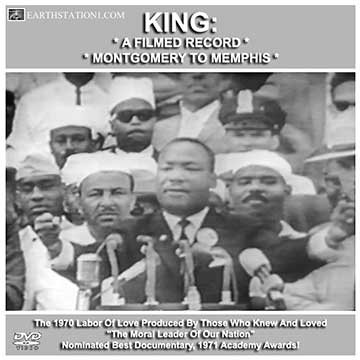
May 24, 1961: Civil Rights Movements: The
American Civil Rights Movement (1954-1968): Anti-Black Racism In
The United States: Segregation: Racial Segregation: Civil Rights
Protests: Civil Rights Protests In The United States: Transport
And Bus Segregation In The United States: The Freedom Riders: The
Freedom Riders: Race Riots: Race Riots In The United States: The
Freedom Ride To Jackson: -- Freedom Riders board buses in
Montgomery, Alabama headed bound for Jackson, Mississippi.
Surrounded by Highway Patrol and the National Guard, the buses
arrived in Jackson without incident, but the riders were
immediately arrested for "disturbing the peace" when
they tried to use the white-only facilities at the Tri-State
Trailways depot. The third bus arrived at the Jackson Greyhound
station early on May 28, and its Freedom Riders were arrested. In
Montgomery, the next round of Freedom Riders, including the Yale
University chaplain William Sloane Coffin, Gaylord Brewster Noyce,
and southern ministers Shuttlesworth, Abernathy, Wyatt Tee Walker,
and others were similarly arrested for violating local segregation
ordinances. This established a pattern followed by subsequent
Freedom Rides, most of which traveled to Jackson, where the Riders
were arrested and jailed. Their strategy became one of trying to
fill the jails. Once the Jackson and Hinds County jails were
filled to overflowing, the state transferred the Freedom Riders to
the infamous Mississippi State Penitentiary (known as Parchman
Farm). Abusive treatment there included placement of Riders in the
Maximum Security Unit (Death Row), issuance of only underwear, no
exercise, and no mail privileges. When the Freedom Riders refused
to stop singing freedom songs, prison officials took away their
mattresses, sheets, and toothbrushes. More Freedom Riders arrived
from across the country, and at one time, more than 300 were held
in Parchman Farm. Riders arrested in Jackson included Kwame Ture
(then known as Stokley Carmichael) (19), Catherine Burks (21),
Gloria Bouknight (20), Luvahgn Brown (16), Margaret Leonard (19),
Helen O'Neal (20), Hank Thomas (20), Carol Silver (22), Hezekiah
Watkins (13), Peter Stoner (22), Byron Baer (31), and LeRoy Glenn
Wright (19) in addition to many more. While in Jackson, Freedom
Riders received support from local grassroots civil rights
organization Womanpower Unlimited, which raised money and
collected toiletries, soap, candy and magazines for the imprisoned
protesters. Upon Freedom Riders' release, Womanpower members would
provide places for them to bathe while offering them clothes and
food. Founded by Clarie Collins Harvey, the group was considered
instrumental in the success of the Freedom Riders. Freedom Rider
Joan Trumpauer Mulholland said the Womanpower members "were
like angels supplying us with just little simple necessities."
On Sale @ 15% Off Discount Till Midnight PT!
https://store.earthstation1.com/king-a-filmed-record--montgomery-to-memphis-dvd.html
Today's
EarthStation1.com #OnThisDay Commemorative Memorial Title:
Soldiers: A History Of Men In Battle TV Series + Bonus Title DVD
MP4
Today, May 24, 2026 May 24: Aviation Maintenance Technician
Day: -- Today we take the time to honor all of our Aviation
Maintenance techs because without them we'd never make it where we
wanted to go. We often thank pilots and flight attendants while we
make our way to and from far distances, but we never get to thank
the important people on the ground who ensure our safety. Every
time you step on a plane, every time you buy a ticket, every time
you arrive safely, you have an aviation technician to thank. They
are the unsung heroes of travelers and some of the hardest workers
in the travel industry. While we have high respect for anybody who
makes an honest living, Aviation Maintenance Techs are not your
average maintenance person, they are mechanical experts dedicated
to your safety. So today we offer a special thank you for
continuing to break the barriers of human limitations and set
course to the skies! As many know, the story of humankind's first
experience taking a flight can be attributed to two brothers,
Orville and Wilbur Wright, who's unhindered dedication to achieve
beyond what was thought possible led them to greatness. But it
wasn't entirely on their own. The year was 1899 when they began
their experiments. The Wright brothers made their way to Kitty
Hawk, North Carolina for its consistent breeze that would assist
in their efforts. They based their research largely on the design
of the Chanute-Herring biplane hang glider, or the "double
decker" as the Wright brothers referred to it. They used
Aeronautical data published by Otto Lolenthl, another aviation
pioneer who flew his experiments near Chicago. The Wright brothers
carefully studied Lilenthal's work, modified and perfected it,
developing distinct ways to avoid nose dives and catastrophic
failures. In 1902 a mechanic by the name of Charles Edward Taylor
joined in their journey and built a 12-horsepower engine light
enough for flight. It is Charles Taylor who we specifically honor
on this day because, without him, none of the success of the
Wright brothers would have occurred. Through their experiments,
they catapulted aviation technology into the working principles
for modern aircraft. Finally, on December 14, 1903, the 121st
anniversary of the first hot air balloon test flight completed by
the Montgolfier brothers, Wilbur Wright made the first-ever
three-second flight attempt. Unfortunately only partially
successful, Wilbur wrote to his family about his confidence in its
potential for full flight. Just a few days later, on December 17,
1903, both brothers became the first human beings to experience
motorized flight, and the moment was captured forever by John T.
Daniels, of the U.S. government coastal lifesaving crew.
https://store.earthstation1.com/soldiers-a-history-of-men-in-battle-4-dvds-all-13-sh413.html
May 24: Aviation Maintenance Technician
Day: -- Today we take the time to honor all of our Aviation
Maintenance techs because without them we'd never make it where we
wanted to go. We often thank pilots and flight attendants while we
make our way to and from far distances, but we never get to thank
the important people on the ground who ensure our safety. Every
time you step on a plane, every time you buy a ticket, every time
you arrive safely, you have an aviation technician to thank. They
are the unsung heroes of travelers and some of the hardest workers
in the travel industry. While we have high respect for anybody who
makes an honest living, Aviation Maintenance Techs are not your
average maintenance person, they are mechanical experts dedicated
to your safety. So today we offer a special thank you for
continuing to break the barriers of human limitations and set
course to the skies! As many know, the story of humankind's first
experience taking a flight can be attributed to two brothers,
Orville and Wilbur Wright, who's unhindered dedication to achieve
beyond what was thought possible led them to greatness. But it
wasn't entirely on their own. The year was 1899 when they began
their experiments. The Wright brothers made their way to Kitty
Hawk, North Carolina for its consistent breeze that would assist
in their efforts. They based their research largely on the design
of the Chanute-Herring biplane hang glider, or the "double
decker" as the Wright brothers referred to it. They used
Aeronautical data published by Otto Lolenthl, another aviation
pioneer who flew his experiments near Chicago. The Wright brothers
carefully studied Lilenthal's work, modified and perfected it,
developing distinct ways to avoid nose dives and catastrophic
failures. In 1902 a mechanic by the name of Charles Edward Taylor
joined in their journey and built a 12-horsepower engine light
enough for flight. It is Charles Taylor who we specifically honor
on this day because, without him, none of the success of the
Wright brothers would have occurred. Through their experiments,
they catapulted aviation technology into the working principles
for modern aircraft. Finally, on December 14, 1903, the 121st
anniversary of the first hot air balloon test flight completed by
the Montgolfier brothers, Wilbur Wright made the first-ever
three-second flight attempt. Unfortunately only partially
successful, Wilbur wrote to his family about his confidence in its
potential for full flight. Just a few days later, on December 17,
1903, both brothers became the first human beings to experience
motorized flight, and the moment was captured forever by John T.
Daniels, of the U.S. government coastal lifesaving crew.
https://store.earthstation1.com/soldiers-a-history-of-men-in-battle-4-dvds-all-13-sh413.html
Today's
EarthStation1.com #OnThisDay Commemorative Memorial Title: Triumph
Of The West 13 Part TV Documentary Series DVD, Download, USB
Today, May 24, 2026May 24, 1543: #DOTD: #RIP: Nicolaus
Copernicus, Polish Renaissance-era polymath considered the founder
of modern astronomy, Doctor Of Canon Law, mathematician,
physician, classics scholar, translator, governor, diplomat,
economist and polyglot (multilinguist) whose theory of the
universe placed the Sun rather than Earth at the center of the
universe (heliocentrism) (b. February 19, 1473) #dies aged 70 in
Frombork, Royal Prussia, Poland, after having been seized with
apoplexy (hemorrhagic stroke) and paralysis towards the close of
1542. Legend has it that he was presented with the final printed
pages of his De Revolutionibus Orbium Coelestium (Latin: "On
The Revolutions Of The Heavenly Spheres"), his seminal work
on the heliocentric theory, on the very day that he died, allowing
him to take farewell of his life's work. He is reputed to have
awoken from a stroke-induced coma, looked at his book, and then
died peacefully. Copernicus was reportedly buried in Frombork
Cathedral, where a 1580 epitaph stood until being defaced; it was
replaced in 1735. For over two centuries, archaeologists searched
the cathedral in vain for Copernicus's remains. Efforts to locate
them in 1802, 1909, 1939 had come to nought. In 2004 a team led by
Jerzy Gassowski, head of an archaeology and anthropology institute
in Pultusk, Poland, a town known for its historic architecture and
Europe's longest paved marketplace (380 metres/1,250 ft long)
began a new search, guided by the research of historian Jerzy
Sikorski. In August 2005, after scanning beneath the cathedral
floor, they discovered what they believed to be Copernicus's
remains. The discovery was announced only after further research,
on November 3, 2008. Gassowski said he was "almost 100
percent sure it is Copernicus". Forensic expert Capt. Dariusz
Zajdel of the Polish Police Central Forensic Laboratory used the
skull to reconstruct a face that closely resembled the
features-including a broken nose and a scar above the left eye-on
a Copernicus self-portrait. The expert also determined that the
skull belonged to a man who had died around age 70-Copernicus's
age at the time of his death. The grave was in poor condition, and
not all the remains of the skeleton were found; missing, among
other things, was the lower jaw. The DNA from the bones found in
the grave matched hair samples taken from a book owned by
Copernicus which was kept at the library of the University of
Uppsala in Sweden. On May 22, 2010, Copernicus was given a second
funeral in a Mass led by Jozef Kowalczyk, the former papal nuncio
to Poland and newly named Primate of Poland. Copernicus's remains
were reburied in the same spot in Frombork Cathedral where part of
his skull and other bones had been found. A black granite
tombstone identifies him as the founder of the heliocentric theory
and also a canon of the Warmian Cathedral chapter there. The
tombstone bears a representation of Copernicus's model of the
Solar System: a golden Sun encircled by six of the planets.
Nicolaus Copernicus was born in Torun, Royal Prussia, a region
that had been part of the Kingdom Of Poland since 1466. In 1517 he
derived the quantity theory of money (QTM), a key concept in
monetary economics that states that the general price level of
goods and services is directly proportional to the amount of money
in circulation, or money supply. In 1519 he formulated an economic
principle that later came to be called Gresham's law, a monetary
principle stating that "bad money drives out good"; for
example, if there are two forms of commodity money in circulation,
which are accepted by law as having similar face value, the more
valuable commodity will gradually disappear from circulation. In
all likelihood, he arrived at his theory of heliocentrism
independently of Aristarchus of Samos, who had articulated similar
ideas some eighteen centuries earlier. The publication of
Copernicus' book De revolutionibus orbium coelestium (On the
Revolutions of the Celestial Spheres), just before his death in
1543, was a major event in the history of science, triggering the
Copernican Revolution and making a pioneering contribution to the
Scientific Revolution.
https://store.earthstation1.com/triumph-of-the-west-tv-series-5-dual-layer-dvds-all-13-sh513.html
Today's
EarthStation1.com #OnThisDay Commemorative Memorial Title: WABC
Radio Airchecks MP3 Collection 1960s-1980s DVD, MP3 Download, USB
Today, May 24, 2026May 24, 2024: #DOTD: #RIP: Doug Ingle,
American keyboardist and singer, best known as the founder and
former organist, primary composer, and lead vocalist for the
psychedlic rock band Iron Butterfly (b. September 9, 1945) #dies
of undisclosed causes at an undisclosed location at the age of 78.
His burial details are not publicly disclosed. Doug Ingle was born
Douglas Lloyd Ingle in Omaha, Nebraska. Ingle wrote the band's
iconic song "In-A-Gadda-Da-Vida", which was first
released in 1968. He is the last surviving member of the classic
1967-1969 lineup. Ingle had a short stint with the pop group Stark
Naked and the Car Thieves in the early 1970s after he left Iron
Butterfly. His father Lloyd, a church organist, introduced him to
music at an early age. Ingle moved from his native Nebraska within
three months of his birth to the Rocky Mountains and later the
family moved to San Diego. Ingle founded Iron Butterfly in San
Diego in 1966, remaining with the group when they relocated to Los
Angeles later that year, and became part of the group's classic
lineup, featuring Ingle, drummer Ron Bushy, guitarist Erik Brann
and bassist Lee Dorman. His work is featured on the Iron Butterfly
albums Heavy (1968), In-A-Gadda-Da-Vida (1968), Ball (1969) and
Metamorphosis (1970). In addition to authoring the band's biggest
hit, also called "In-A-Gadda-Da-Vida", he co-authored
their remaining three hits, "Soul Experience", "In
the Time of Our Lives", and "Easy Rider", with
other members of the group. When Iron Butterfly broke up in 1971,
Ingle toured occasionally with his former band members, but was
not involved with either of Iron Butterfly's later two albums,
Scorching Beauty and Sun and Steel, both from 1975. Between 1974
and 1978, Ingle managed a recreational vehicle park in the Los
Angeles National Forest. He spent time painting houses in Oregon,
Washington and California. With the deaths of Brann, Dorman and
Bushy in 2003, 2012 and 2021, respectively, Ingle was the last
surviving member of the 1968-1969 lineup of Iron Butterfly.
https://store.earthstation1.com/wabc-musicradio-shows-mp3-dvd-60s80s-am-360807775.html
Today's
EarthStation1.com #OnThisDay Commemorative Memorial Title:
Frederick Douglass Biography Documentary DVD MP4 Download USB
Drive
Today, May 24, 2026May 24, 1879: #DOTD: #RIP: William Lloyd
Garrison, who signed and printed his name Wm. Lloyd Garrison,
American abolitionist, publisher, journalist, suffragist, social
reformer and activist, founder in 1831 of the widely-read Boston
anti-slavery newspaper The Liberator published for the next fifty
years (b. December 10, 1805) loses consciousness and #dies at his
daughter Fanny's New York City home of kidney disease just before
midnight, aged 73. Garrison was buried in the Forest Hills
Cemetery in Boston's Jamaica Plain neighborhood on May 28, 1879.
At the public memorial service, eulogies were given by Theodore
Dwight Weld and Wendell Phillips. Eight abolitionist friends, both
white and black, served as his pallbearers. Flags were flown at
half-staff all across Boston. Frederick Douglass, then employed as
a United States Marshal, spoke in memory of Garrison at a memorial
service in a church in Washington, D.C., saying, "It was the
glory of this man that he could stand alone with the truth, and
calmly await the result." William Lloyd Garrison was born in
Newburyport, Massachusetts, the son of immigrants from the British
colony of New Brunswick, in present-day Canada. He was one of the
founders of the American Anti-Slavery Society, and promoted
immediate and uncompensated, as opposed to gradual and
compensated, emancipation of slaves in the United States. He also
traveled throughout the U.S. delivering scathing antislavery
speeches, even advocating the North should secede from the South.
In 1854, he burned a copy of the U.S. Constitution, declaring, "So
perish all compromises with tyranny!" Garrison was not an
abolitionist who became a publisher, but a printer who became an
abolitionist. Garrison was a typesetter and could run a printing
shop; he wrote his editorials in The Liberator while setting them
in type, without writing them out first on paper. This helped
assure the viability of The Liberator, and also that it contained
exactly what Garrison wanted, as he did not have to deal with any
outsiders to produce his paper, except his partner Isaac Knapp,
with whom he eventually had a falling-out. Like the other major
abolitionist printer-publisher, the martyred Elijah Lovejoy, a
price was on his head; he was burned in effigy and a gallows was
erected in front of his Boston office. While he was relatively
safe in Boston, at one point he had to be smuggled onto a ship to
escape to England, where he remained for a year. Garrison also
emerged as a leading advocate of women's rights, which prompted a
split in the abolitionist community. In the 1870s, Garrison became
a prominent voice for the women's suffrage movement.
https://store.earthstation1.com/frederick-douglass-biography-documentary-dvd-mp4-download-usb-driv4.html
Today's
EarthStation1.com #OnThisDay Commemorative Memorial Title: John
Brown Abolitionist Fanatic Documentary DVD MP4 Download USB Drive
Today, May 24, 2026May 24, 1856: Origins Of The American
Civil War (The Civil War, The War Between The States): Events
Leading To The American Civil War: The Pottawatomie Massacre: --
John Brown and his men kill five slavery supporters at
Pottawatomie Creek, Kansas, hacking some into pieces with much of
it done in front of their families. The Pottawatomie massacre
occurred during the night of May 24 and the morning of May 25,
1856. In reaction to the sacking of Lawrence, Kansas by
pro-slavery forces, John Brown and a band of abolitionist
settlers, some of them members of the Pottawatomie Rifles, killed
five settlers north of Pottawatomie Creek in Franklin County,
Kansas. This was one of the many bloody episodes in Kansas
preceding the American Civil War, which came to be known
collectively as Bleeding Kansas. Bleeding Kansas was largely
brought about by the Missouri Compromise and the Kansas-Nebraska
Act.
https://store.earthstation1.com/john-brown-abolitionist-fanatic-documentary-dvd-mp4-download-usb-driv4.html
Today's
EarthStation1.com #OnThisDay Commemorative Memorial Title: The
Falklands War: The Untold Story TV Series DVD, Download, USB Drive
Today, May 24, 2026May 24, 1982: The British Empire: The
Falkland Islands (Spanish: Islas Malvinas): The Falkland Islands
Sovereignty Dispute: The Falklands War (Spanish: Guerra De Las
Malvinas): The Battle Of San Carlos: -- A battle between aircraft
and ships that lasts from May 21-25, 1982 continues in the
aftermatch of the British amphibious assault codenamed Operation
Sutton on the shores of San Carlos Water (which became known as
"Bomb Alley"), at Ajax Bay and Port San Carlos, near San
Carlos on East Falkland. In The Battle Of San Carlos, Low-flying
land-based Argentine jet aircraft made repeated attacks on ships
of the British Task Force. It was the first time in history that a
modern surface fleet armed with surface-to-air missiles and with
air cover backed up by STOVL carrier-based aircraft defended
against full-scale air strikes. The British sustained losses and
damage but were able to create and consolidate a beachhead and
land troops. John Nott, British Defence Minister, said during the
batttle "I think the Argentine pilots are showing great
bravery, it would be foolish of me to say anything else." In
spite of the British air defence network, the Argentine pilots
were able to attack their targets but some serious procedural
failures prevented them from getting better results - most
notably, shortcomings of their bomb fuses. Thirteen bombs hit
British ships without detonating. Lord Craig, the retired Marshal
of the Royal Air Force, is said to have remarked: "Six better
fuses and we would have lost". The British warships, although
themselves suffering most of the attacks, were successful in
keeping the strike aircraft away from the landing ships, which
were well inside the bay. With the British troops on Falklands
soil, a land campaign followed until Argentine General Mario
Menendez surrendered to British Major General Jeremy Moore on June
15 in Stanley. The subsonic Harrier jump-jet, armed with the
AIM-9L Sidewinder air-to-air missile, proved capable as an air
superiority fighter. The actions had a profound impact on later
naval practice. During the 1980s most warships from navies around
the world were retrofitted with close-in weapon systems and guns
for self-defence. First reports of the number of Argentine
aircraft shot down by British missile systems were subsequently
revised down. On the fourth day, May 24, Argentine pilots on the
continent openly expressed their concern about the lack of
collaboration between the three branches of the armed forces, and
protested with passive resistance. General Galtieri, acting
president of Argentina, decided to visit Comodoro Rivadavia the
next day, May 25 (Argentina's National Day), to try to convince
them to keep fighting, but when he arrived in the morning the
pilots had changed their minds and were already flying to the
islands. Six sorties were launched by the FAA against the British
forces. RFA Sir Lancelot and probably Sir Galahad and Sir Bedivere
and ground targets were attacked. Four attack aircraft were shot
down, with one pilot killed.
https://store.earthstation1.com/the-falklands-war-the-untold-story-dvd-2-part-tv-serie2.html
Today's
EarthStation1.com #OnThisDay Commemorative Memorial Title: The Old
Time Radio Adventure MegaSet MP3 DVD, Download, USB Drive
Today, May 24, 2026May 24, 1993: #DOTD: #RIP: Carlton E.
Morse, author, radio producer and journalist, considered by many
to be one of the best radio scriptwriters (b. June 4, 1901) #dies
of natural causes in Redwood City, Sacramento, California, aged
91. His burial details are not publicly disclosed. Carlton E.
Morse was born Carlton Errol Morse in Jennings, Louisiana. He is
best nown for his creation of three popular Golden Age Of Radio
serials: One Man's Family, a radio soap opera which debuted in
1932 and ran until 1959, the longest-running uninterrupted
dramatic serial in the history of American radio; I Love a
Mystery, an American radio drama series that aired from 1939 to
1944 about three friends who ran a detective agency and traveled
the world in search of adventure; and Adventures By Morse, a
syndicated 1944-1945 adventure series which he produced, wrote and
directed. Morse was also a pioneer in television as well. He was
part of Slice Of Life, the first television drama series aired on
Los Angeles' television station, KFI. Morse brought One Man's
Family to television (1949-52), years before it left the airwaves
with the end of the Golden Age Of Radio. Morse brought a revision
of Slice of Life to network television with the title Mixed
Doubles. He was producer, director, and writer for the situation
comedy, which ran on NBC August through October in 1949. He also
was the head writer of the 1958 television soap opera Kitty Foyle
that was based on the 1940 film of the same name starring Ginger
Rogers. Morse eventually retired from radio/TV in order to write
novels from his home, named Seven Stones. Three of his books,
Killer At The Wheel, A Lavish Of Sin and Stuff The Lady's Hatbox
were based on I Love a Mystery. In 1984, Morse's first wife
Patricia died. Later in life, Morse copyrighted his scripts and
novels. He was a member of San Francisco's Bohemian Club, and he
attended many conventions held in his honor. Before his death in
1993, Morse founded the Morse Family Trust. As of 2024, he is
survived by his second wife, Millie Morse. Morse has a star in the
Radio section of the Hollywood Walk of Fame; it is located in
front of 6445 Hollywood Boulevard.
https://store.earthstation1.com/the-old-time-radio-adventure-mp3-dvd-megase3.html
Today's
EarthStation1.com #OnThisDay Commemorative Memorial Title:
Dangerous Years President Eisenhower And The Cold War DVD, MP4,
USB
Today, May 24, 2026May 24, 1959: #DOTD: John Foster Dulles,
American soldier, lawyer, Republican senator for New York and
diplomat of the Dulles American political family, 52nd United
States Secretary Of State under President Dwight D. Eisenhower
from 1953 to 1959, a significant figure in the early Cold War era
who advocated an aggressive stance against communism throughout
the world (b. February 25, 1888) #dies of cancer at Walter Reed
Army Medical Center in his hometown of Washington, D.C. at the age
of 71. Funeral services were held in Washington National Cathedral
on May 27, 1959. He is buried at Arlington National Cemetery, in
Arlington, Virginia. John Foster Dulles was born one of five
children and the eldest son born to Presbyterian minister Allen
Macy Dulles and his wife, Edith (nee Foster). His maternal
grandfather, John W. Foster, served as 32nd United States
Secretary Of State under President Benjamin Harrison, and doted on
Dulles and his brother Allen, who would later become the director
of the Central Intelligence Agency. His uncle, Robert Lansing,
served as the 42nd United States Secretary Of State under
President Woodrow Wilson. John Foster Dulles joined the leading
New York law firm of Sullivan & Cromwell after graduating from
George Washington University Law School. He served on the War
Industries Board during World War I and he was a U.S. legal
counsel at the 1919 Paris Peace Conference. He became a member of
the League of Free Nations Association, which supported American
membership in the League of Nations. Dulles also helped design the
Dawes Plan, which sought to stabilize Europe by reducing German
war reparations. During World War II, Dulles was deeply involved
in post-war planning with the Federal Council of Churches
Commission on a Just and Durable Peace. Dulles served as the chief
foreign policy adviser to Thomas E. Dewey, the Republican
presidential nominee in 1944 and 1948. He also helped draft the
preamble to the United Nations Charter and served as a delegate to
the United Nations General Assembly. In 1949, Dewey appointed
Dulles to fill the vacancy caused by the resignation of Democratic
Senator Robert F. Wagner. Dulles served for four months before his
defeat in a special election by Herbert H. Lehman. Despite having
supported his political opponents, Dulles became a special advisor
to President Harry S. Truman, with a focus on the Indo-Pacific
region. In this role from 1950 to 1952, he became the primary
architect of the Treaty of San Francisco, which ended World War II
in Asia, the U.S.-Japan Security Treaty, which established the
U.S.-Japan Alliance, and the ANZUS security treaty between
Australia, New Zealand, and United States. After Eisenhower won
the 1952 presidential election, he chose Dulles as Secretary Of
State. Throughout his tenure, Dulles favored a strategy of massive
retaliation in response to Soviet aggression and concentrated on
building and strengthening Cold War alliances, most prominently
the North Atlantic Treaty Organization. He was the architect of
the Southeast Asia Treaty Organization, an anti-Communist
defensive alliance between the United States and several nations
in and near Southeast Asia. He also helped instigate the 1953
Iranian coup d'etat and the 1954 Guatemalan coup d'etat. Dulles
advocated support of the French in their war against the Viet Minh
in Indochina but rejected the Geneva Accords between France and
the communists, instead supporting South Vietnam after the Geneva
Conference in 1954. Dulles resigned from office in 1959 and died
later that year.
https://store.earthstation1.com/dangerous-years-president-eisenhower-and-the-cold-war-dvd.html
Today's
EarthStation1.com #OnThisDay Commemorative Memorial Title: The Cat
And The Canary 1927 Laura La Plante Creighton Hale DVD MP4 USB
Today, May 24, 2026May 24, 1882: #BOTD: #HBD! Creighton
Hale, Irish-American theatre, film, and television actor whose
career extended more than a half-century, from the early 1900s to
the end of the 1950s (d. August 9, 1965) is #born Patrick
Fitzgerald in County Cork, Ireland. He was educated in Dublin and
London, and later attended Ardingly College in Sussex. He
immigrated to America in his early twenties, traveling with a
troupe of actors. While starring in Charles Frohman's Broadway
production of Indian Summer, Hale was spotted by a representative
of the Pathe Film Company. He eventually became known
professionally as Creighton Hale, although the derivation of those
names remains unknown. His first movie was The Exploits of Elaine
in 1914. He starred in hit films such as Way Down East, Orphans of
the Storm, and The Cat and the Canary. When talkies came about,
his career declined. He made several appearances in Hal Roach's
Our Gang series (School's Out, Big Ears, Free Wheeling), and also
played uncredited bits in major talking films such as Larceny,
Inc., The Maltese Falcon, and Casablanca. His two sons, Creighton
Hale Jr. and Robert Lowe Hale, from his first marriage to Victoire
Lowe were adopted by Lowe's second husband, actor John Miljan.
After his divorce, Hale married Kathleen Bering in Los Angeles in
1931. He died in South Pasadena at age 83 and was buried at
Duncans Mills Cemetery in Northern California.
https://store.earthstation1.com/the-cat-and-the-canary-1927-dvd-paul-leni-laura-la-pl1927.html
Today's
EarthStation1.com #OnThisDay Commemorative Memorial Title: G-Men:
The Rise Of J. Edgar Hoover DVD, Video Download, USB Drive
Today, May 24, 2026May 24, 1956: #DOTD: Fritz Joubert
Duquesne (or Du Quesne), South African Boer and German soldier,
big-game hunter, journalist, spy, con man and criminal, leader of
The Duquesne Spy Ring, the largest espionage case in the United
States history that ended in conviction (b. September 21, 1877)
#dies at City Hospital on Welfare Island (now Roosevelt Island),
in New York City at the age of 78. He is buried at the Potter's
Field on Hart Island, Bronx County, New York City. Duquesne fought
on the side of the Boers in the Second Boer War and as a secret
agent for Germany during both World Wars. He gathered human
intelligence, led spy rings and carried out sabotage missions as a
covert field asset in South Africa, Great Britain, Central and
South America, and the United States. He went by many aliases,
fictionalized his identity and background on multiple occasions,
and operated as a con man. As a Boer spy he was known as the
"Black Panther", in World War II he operated under the
code name DUNN, and in FBI files he is frequently referred to as
"The Duke". He was captured, convicted, and escaped
several prisons. During the Second Boer War, from 1899 to 1902,
Duquesne was captured and imprisoned three times by the British
and once by the Portuguese, and each time he escaped. On one
occasion he infiltrated the British army, became a British
officer, and led an attempt to sabotage Cape Town and to
assassinate the commander-in-chief Lord Kitchener. His team was
given up by an informant and all were captured and sentenced to
death. After a failed attempt to escape prison in Cape Town, he
was sent to prison in Bermuda, but he escaped to the United States
and became an American citizen. In World War I, he became a spy
and ring leader for Germany and during this time he sabotaged
British merchant ships in South America with concealed bombs and
destroyed several. He sometimes purchased insurance on merchandise
he shipped on the vessels he sabotaged and then filed claims for
damages. He became known as "the man who killed Kitchener"
since he claimed to have guided a German U-boat to sink HMS
Hampshire on which Lord Kitchener was en route to Russia in 1916,
although forensics of the ship do not support this claim. After he
was caught by federal agents in New York in 1917, he feigned
paralysis for two years and cut the bars of his cell to make his
escape, thereby avoiding deportation to England where he faced
execution for the deaths of British sailors. In 1932, he was again
captured in New York by federal agents and charged with both
homicide and for being an escaped prisoner, only this time he was
set free after Britain declined to pursue the wartime crimes. The
last time he was captured and imprisoned was in 1941 when he and
32 other members of the Duquesne Spy Ring were caught by William
G. Sebold, a double agent with the FBI. On January 2, 1942, The
Federal Bureau of Investigation (FBI) sentenced 33 members of a
German spy ring headed by Duquesne to serve a total of over 300
years in prison in the largest espionage case in United States
history. The Duquesne Spy Ring is the largest espionage case in
the United States history that ended in convictions. A total of 33
members of a German espionage network headed by Frederick "Fritz"
Joubert Duquesne were convicted after a lengthy investigation by
the FBI. Of those indicted, 19 pleaded guilty. The remaining 14
were brought to jury trial in Federal District Court, Brooklyn,
New York, on September 3, 1941; all were found guilty on December
13, 1941. The agents who formed the Duquesne Ring were placed in
key jobs in the United States to get information that could be
used in the event of war and to carry out acts of sabotage: one
opened a restaurant and used his position to get information from
his customers; another worked on an airline so that he could
report Allied ships that were crossing the Atlantic Ocean; others
worked as delivery people as a cover for carrying secret messages.
William G. Sebold, who had been blackmailed into becoming a spy
for Germany, became a double agent and helped the FBI gather
evidence. For nearly two years, the FBI ran a shortwave radio
station in New York for the ring. They learned what information
Germany was sending its spies in the United States and controlled
what was sent to Germany. Sebold's success as a counterespionage
agent was demonstrated by the successful prosecution of the German
agents. One German spymaster later commented the ring's roundup
delivered "the death blow" to their espionage efforts in
the United States. FBI director J. Edgar Hoover called his
concerted FBI swoop on Duquesne's ring the greatest spy roundup in
U.S. history. The 1945 film The House on 92nd Street was a thinly
disguised version of the Duquesne Spy Ring saga of 1941. Between
wars, Duquesne served as an adviser on big game hunting to U.S.
President Theodore Roosevelt, as a publicist in the movie
business, as a journalist, as a fictional Australian war hero, and
as head of the New Food Society in New York. During the Boer war
he had been under orders to kill Frederick Russell Burnham, Chief
of Scouts in the British Army, but in 1910 he worked with both
Burnham and then Rep. Robert Broussard to lobby the U.S. Congress
to fund the importation of hippopotamuses into the Louisiana
bayous to solve a severe meat shortage. Duquesne often took on
many identities, reinvented his past at will, attached his
ancestry to aristocratic clans, granted himself military titles
and medals, and spoke of many people, some fact and some
fictional.
https://store.earthstation1.com/gmen-the-rise-of-j-edgar-hoover-dvd.html
Today's
EarthStation1.com #OnThisDay Commemorative Memorial Title: Rowan &
Martin's Laugh-In MegaSet 2 Albums 2 Blooper Sets MP3 MP4 DVD
Today, May 24, 2026May 24, 2008: #DOTD: #RIP: Dick Martin,
American comedian, actor, and director, best known for his role as
the cohost of the sketch comedy program Rowan and Martin's
Laugh-In from 1968-73 (b. January 30, 1922) #dies of breathing
complications at the age of 86 in Santa Monica, California. He had
lost the use of a lung due to tuberculosis as a teenager and
suffered respiratory problems late in life. His remains were
cremated, and the ashes were scattered in The Pacific Ocean.
Thomas Richard Martin was born in Battle Creek, Michigan to
William, a salesman and Ethel Martin, a homemaker. In the early
1930s, the family moved to Detroit, where his teenage years
included a bout with tuberculosis, which kept him out of the
military. He graduated from Michigan State University. Early in
his career, Martin was a staff writer for Duffy's Tavern, a radio
situation comedy. He and Dan Rowan formed the comedy team Rowan
and Martin in 1952 and played in nightclubs throughout the United
States and overseas. Martin played a drunk heckling a
Shakespearean performer, a mainstay of their act for years. They
could frequently be seen as host-performers on NBC's Colgate
Comedy Hour, alternating with Dean Martin and Jerry Lewis and
other more established names. In 1958, they starred in Hal
Kanter's comedy Western Once Upon a Horse which failed to catch on
with moviegoers. In 1960, their contract with NBC was cancelled
four years early by mutual consent. In 1962, Martin worked solo,
playing next-door neighbor to Lucille Ball during the first season
of her comeback comedy The Lucy Show. He and Rowan returned to the
nightclub circuit until 1966, when they were asked to host the
summer replacement series for the Dean Martin Show. He co-starred
in the 1966 Doris Day movie The Glass Bottom Boat. The exposure
led to an opportunity for Rowan and Martin to team up with
producers Ed Friendly and George Schlatter and create Rowan and
Martin's Laugh-In (1968-1973) on NBC. The comedy show was an
immediate hit, becoming the number one American television program
within two months of its debut. It was the top-rated show in its
second and third seasons. Laugh-In had a uniquely fast-paced
stream-of-consciousness style of blackout gags, double entendre,
topical satire, and catchphrases, much of it delivered by a cast
of then-unknowns such as Goldie Hawn, Lily Tomlin, and Arte
Johnson. At the center of the maelstrom stood the veterans Rowan
and Martin, who bemusedly made no effort to slow down the program.
Martin later said, "We designed it so that we are two
relatively normal guys wandering through a sea of madness,"
and described his comic persona as "a kind of inept lech"
who could be laughed at as well as laughed with. In real life,
Martin spent the 1960s enjoying his high-flying lifestyle of women
and parties. After Rowan retired from show business, Martin was a
frequent panelist on game shows such as Match Game, Password Plus,
and Tattletales, and he also hosted a parody game show called The
Cheap Show in 1978, and the game show Mindreaders in 1979. Martin
also established himself as an efficient comedy director. Starting
on The Bob Newhart Show, he directed for over a dozen series.
Martin later became the chief director of the 1980s sitcom
Newhart. In a 1998 episode of The Nanny, Martin guest-starred as a
homeless man Fran Fine meets in a park who turns out to be Preston
Collier, one of the wealthiest men in New York City. In 1992, he
played a small role in the Canadian film North of Pittsburgh,
which was directed by his son Richard. In 1996, Martin guest
starred as sociology professor Dr. Ben Littmeyer on 3rd Rock from
the Sun. Martin's son Richard was born in 1956. He married singer
Peggy Connelly in 1957, and after divorcing her he married Playboy
Playmate and Beyond the Valley of the Dolls star Dolly Read in
1971. Martin and Read divorced in June 1974, but remarried in 1978
and remained married until his death.
https://store.earthstation1.com/rowan-and-martin-discount-set-2-albums-2-blooper-reel-sets-mp3-mp4-dvd.html
Today's
EarthStation1.com #OnThisDay Commemorative Memorial Title: Outer
Space Films 1 Project Mercury Start To Finish DVD, Download, USB
Today, May 24, 2026May 24, 1962: Rocket Launches: The
History Of Spaceflight: The Aftermath Of World War II: The Cold
War: The Space Age: The Space Age: Space Programs Of The United
States: Human Spaceflight Programs: Project Mercury: Mercury-Atlas
7 (MA-7): -- American astronaut Scott Carpenter, the sixth human
and the fourth American in space, is launched into space at
12:45:16 UTC atop an Atlas LV-3B 107-D lauch vehicle from Cape
Canaveral Launch Complex 14 (LC-14) and orbits the Earth three
times in the Aurora 7 space capsule. Mercury-Atlas 7 was the
fourth flight of Project Mercury, the first manned space program
of the United States. The Mercury spacecraft, named Aurora 7, made
three Earth orbits. A targeting error during reentry took the
spacecraft 250 miles off-course, delaying recovery of Carpenter
and the spacecraft. At dawn of the third and final orbit,
Carpenter inadvertently bumped his hand against the inside wall of
the cabin and solved a mystery from the previous flight: the
resulting bright shower of particles outside the spacecraft - what
John Glenn had called "fireflies" - turned out to be ice
particles shaken loose from the spacecraft's exterior. Near the
end of the flight, Carpenter found that by banging his hand
against the wall of the capsule, he could shake more "fireflies"
loose. It was later concluded that the most probable explanation
for the fireflies was steam from the life support system turning
into the snow when exposed to open space. Then while passing over
Hawaii at the final orbit, flight director Kraft told Carpenter to
begin his retrofire countdown and to shift from manual control to
the automatic attitude control. Partly because he had been
distracted watching the fireflies, Carpenter noted that he had
begun his landing preparations late. As he started to align the
spacecraft he found that the automatic stabilization system would
not hold the required 34-degree pitch and zero-degree yaw
attitude. While trying to determine the source of the trouble, he
fell behind in his check of other items. When he hurriedly
switched to the fly-by-wire control mode, he forgot to switch off
the manual system. As a result, both systems were used redundantly
together for 10 minutes, and fuel was wasted. In addition to the
attitude error, Carpenter also activated the retrorockets three
seconds late, adding another 15 miles or so to the trajectory
error. It was this combination of factors that resulted in the
overshoot of the planned reentry mark. The mission used Mercury
spacecraft No. 18 and Atlas launch vehicle No. 107-D.
https://store.earthstation1.com/outer-space-films-1-project-mercury-start-to-finish-dv1.html
Today's
EarthStation1.com #OnThisDay Commemorative Memorial Title: Duke
Ellington Reminiscing In Tempo + 2 Bonus Titles DVD MP4 Download
Today, May 24, 2026May 24, 1974: #DOTD: #RIP: Duke
Ellington, African American composer, pianist, bandleader and
Prince Hall Freemason (b. April 29, 1899) #dies of complications
from lung cancer and pneumonia a few weeks after his 75th
birthday. At his funeral, attended by over 12,000 people at the
Cathedral of St. John the Divine, Ella Fitzgerald summed up the
occasion: "It's a very sad day. A genius has passed." He
is interred in the Woodlawn Cemetery, the Bronx, New York City.
Duke Ellington was born Edward Kennedy Ellington in Washington,
D.C.. Ellington led a jazz orchestra from 1923 until his death, in
a career spanning over fifty years. Born in Washington, D.C.,
Ellington was based in New York City from the mid-1920s onward,
and gained a national profile through his orchestra's appearances
at the Cotton Club in Harlem. In the 1930s, his orchestra toured
in Europe. Though widely considered to have been a pivotal figure
in the history of jazz, Ellington embraced the phrase "beyond
category" as a liberating principle, and referred to his
music as part of the more general category of American Music,
rather than to a musical genre such as jazz. Some of the musicians
who were members of Ellington's orchestra, such as: saxophonists
Johnny Hodges, Ben Webster and Paul Gonzalves; trumpeters Cootie
Williams and Ray Nance; clarinetist Barney Bigard, drummers Bobby
Durham and Sonny Greer; trombonist Juan Tizol; singers Al Hibbler
and Herb Jeffries, and more are considered to be among the best
players in jazz. Ellington melded them into the best-known
orchestral unit in the history of jazz. Some members stayed with
the orchestra for several decades. A master at writing miniatures
for the three-minute 78 rpm recording format, Ellington wrote more
than one thousand compositions; his extensive body of work is the
largest recorded personal jazz legacy, with many of his works
having become standards. Ellington also recorded songs written by
his bandsmen, for example Juan Tizol's "Caravan", and
"Perdido", which brought a Spanish tinge to big band
jazz. After 1941, Ellington collaborated with
composer-arranger-pianist Billy Strayhorn, whom he called his
writing and arranging companion. With Strayhorn, he composed many
extended compositions, or suites, as well as additional short
pieces. Following an appearance at the Newport Jazz Festival, in
July 1956, Ellington and his orchestra enjoyed a major career
revival and embarked on world tours. Ellington recorded for most
American record companies of his era, performed in several films,
scoring several, and composed stage musicals. Due to his inventive
use of the orchestra, or big band, and thanks to his eloquence and
charisma, Ellington is generally considered to have elevated the
perception of jazz to an art form on a par with other more
traditional musical genres. His reputation continued to rise after
he died, and he was awarded a special posthumous Pulitzer Prize
for music in 1999.
https://store.earthstation1.com/duke-ellington-reminiscing-in-tempo--symphony-in-black-dvd-mp4-us4.html
Today's
EarthStation1.com #OnThisDay Commemorative Memorial Title: The
Golden Age Of Rock 'N' Roll DVD, MP4 Video Download, Flash Drive
Today, May 24, 2026May 24, 2023: #DOTD: #RIP: Tina Turner,
Black American-born Swiss singer, songwriter, dancer,
choreographer, arranger, author, sex symbol and beauty (b.
November 26, 1939) #dies at her home in Kusnacht, Switzerland,
aged 83, following years of illness. Turner's body was cremated
after a private funeral, and given to her husband Erwin Bach.
Turner revealed in her 2018 memoir My Love Story that she had
multiple life-threatening illnesses. She had high blood pressure
since 1978, which remained mostly untreated, and resulted in
damage to her kidneys and eventual kidney failure. In 2013, three
weeks after her wedding to Erwin Bach, she had a stroke and needed
to learn to walk again. In 2016, she was diagnosed with intestinal
cancer. She attempted to treat her health problems with
homeopathy, which worsened her condition. Her chances of receiving
a kidney transplant were considered low and she was urged to start
dialysis. She signed up with an organization that facilitates
assisted suicide, a procedure which is legal in Switzerland,
becoming a member of Exit International. However, her husband
offered to donate a kidney for transplant. She accepted his
donation and had kidney transplantation surgery on April 7, 2017.
Turner also openly discussed her feeling of shame after
discovering that she had dyslexia. In the aftermath of her death,
many fellow artists mourned her loss, including Beyonce, Mariah
Carey, Janelle Monae, Questlove, Pete Townshend, Diana Ross, Dolly
Parton, Debbie Harry, Gloria Gaynor, Bryan Adams, Jimmy Barnes,
Peter Andre, Kerry Katona, Lionel Richie, Elton John, Madonna, Rod
Stewart, Lizzo, Brittany Howard, Mick Jagger, Keith Richards,
Ronnie Wood and Cher. Both Fantasia and Patti LaBelle respectively
paid tribute to Turner with a rendition of "Proud Mary"
at the 66th Annual Grammy Awards and a rendition of "The
Best" at the 2023 BET Awards. Turner also received tributes
by British model Naomi Campbell, as well as film and television
figures such as Oprah Winfrey, Angela Bassett, Jenifer Lewis,
Forest Whitaker, and Bette Midler and theater producer Joop van
den Ende. US president Joe Biden, as well as former presidents
Barack Obama and Bill Clinton, and Swiss president Alain Berset
also paid tribute to Turner through public statements. King
Charles III paid tribute by allowing "The Best" to be
performed during the changing of the guard. Tina Turner was born
Anna Mae Bullock in Brownsville, Tennessee. Raised in the
Southeastern United States, Turner relinquished her American
citizenship after obtaining Swiss citizenship in 2013. She began
her career in 1958 as a featured singer with Ike Turner's Kings of
Rhythm, first recording under the name "Little Ann." Her
introduction to the public as Tina Turner began in 1960 as a
member of the Ike and Tina Turner Revue. Success followed with a
string of notable hits credited to the duo, including "A Fool
in Love", "River Deep: Mountain High" (1966),
"Proud Mary" (1971), and "Nutbush City Limits"
(1973), a song which she herself wrote. In her autobiography, I,
Tina, she revealed several instances of severe domestic abuse
against her by Ike Turner prior to their 1976 split and subsequent
1978 divorce. Raised a Baptist, she encountered faith with
Nichiren Shoshu Buddhism in 1971, crediting the spiritual chant of
Nam Myoho Renge Kyo, which Turner claims helped her to endure
during difficult times. After her divorce from Ike Turner, she
rebuilt her career through live performances. In the 1980s, Turner
launched a major comeback with another string of hits, starting in
late 1983 with the single "Let's Stay Together" followed
by the 1984 release of her fifth solo album Private Dancer which
became a worldwide success. The album contained the song "What's
Love Got to Do with It", which became Turner's biggest hit
and won four Grammy Awards including Record of the Year. Her solo
success continued throughout the 1980s and 90s with multi-platinum
albums including Break Every Rule and Foreign Affair, and with
singles such as "We Don't Need Another Hero (Thunderdome)",
"Typical Male", "The Best", "I Don't
Wanna Fight" and "GoldenEye" for the 1995 James
Bond film of the same name. In 1993, "What's Love Got to Do
with It" was used as the title of a biographical film adapted
from her autobiography, along with the film's accompanying
soundtrack album. In addition to her musical career, Turner has
also garnered success acting in films, including the role of the
Acid Queen in the 1975 rock musical Tommy, a starring role
alongside Mel Gibson in the 1985 action film Mad Max Beyond
Thunderdome, and a cameo role in the 1993 film Last Action Hero.
One of the world's best-selling artists of all time, she has also
been referred to as The Queen of Rock 'n' Roll. Turner has been
termed the most successful female Rock 'n' Roll artist, receiving
eleven Grammy Awards, including eight competitive awards and three
Grammy Hall of Fame awards. Turner has also sold more concert
tickets than any other solo performer in history. Her combined
album and single sales total approximately 180 million copies
worldwide. She is noted for her energetic stage presence, powerful
vocals, and career longevity. In 2008, Turner returned from
semi-retirement to embark on her Tina!: 50th Anniversary Tour.
Turner's tour became one of the highest selling ticketed shows of
2008-09. Rolling Stone ranked Turner no. 63 on their list of 100
greatest artists of all time, and no. 17 on their list of 100
greatest singers of all time. In 1991, Turner was inducted into
the Rock and Roll Hall of Fame. Turner announced in December 2016
that she has been working on Tina, a new musical based on her life
story, in collaboration with Phyllida Lloyd and Stage
Entertainment.
https://store.earthstation1.com/the-golden-age-of-rock-39n39-roll-dvd-complete-tv-series-5-39395.html
Today's
EarthStation1.com #OnThisDay Commemorative Memorial Title: Tommy:
The Who In Concert 1989 DVD, Video Download, USB Flash Drive
Today, May 24, 2026May 24, 1944: #BOTD: #HBD! Patti LaBelle,
African American R & B, soul and gospel singer, actress,
referred to as the "Godmother of Soul", is #born
Patricia Louise Holtin the Eastwick section of Southwest
Philadelphia, Pennsylvania. She began her career in the early
1960s as lead singer and frontwoman of the vocal group Patti
LaBelle and the Bluebelles. Following the group's name change to
Labelle in the 1970s, they released the popular number-one hit
"Lady Marmalade". As a result, after the group split in
1976, LaBelle began a successful solo career, starting with her
critically acclaimed debut album, which included the
career-defining song, "You Are My Friend". LaBelle
became a mainstream solo star in 1984 following the success of the
singles "If Only You Knew", "Love, Need and Want
You" (later sampled for 2002's "Dilemma"), "New
Attitude" and "Stir It Up". Less than two years
later, in 1986, LaBelle scored a number-one album Winner in You
and its number-one duet single, "On My Own", with
Michael McDonald. In 1989, Be Yourself spawned the standard "If
You Asked Me To" (later covered by Celine Dion). LaBelle won
a 1992 Grammy for Best Female R & B Vocal Performance for her
1991 album Burnin', an album that featured "Somebody Loves
You Baby (You Know Who It Is)", "Feels Like Another
One", and "When You've Been Blessed (Feels Like
Heaven)". LaBelle earned a second Grammy win for the live
album Live! One Night Only. Her 1990s albums Burnin', Gems (1994)
and Flame (1997) continued her popularity with young R & B
audiences throughout the decade. She reunited with her Labelle
bandmates for the album Back to Now, followed by a well-received
promotional tour. LaBelle has also experienced success as an
actress with a role in the Oscar-nominated film A Soldier's Story,
and in TV shows such as A Different World and American Horror
Story: Freak Show. In 1992, LaBelle starred in her own TV sitcom
Out All Night. A decade later, LaBelle hosted her own lifestyle TV
show, Living It Up with Patti LaBelle on TV One. In 2015, LaBelle
took part in the dance competition Dancing with the Stars at the
age of 70. Labelle has also seen success launching her own brand
of bedding, cookbooks, and food for various companies. In 2015 her
Patti's Sweet Potato Pie sold millions when a YouTube video
praising the product went viral. As a result, over a 72-hour
period, Walmart sold one pie every second. In a career that has
spanned seven decades, she has sold more than 50 million records
worldwide. LaBelle has been inducted into the Grammy Hall of Fame,
the Hollywood Walk of Fame, the Black Music & Entertainment
Walk of Fame, and the Apollo Theater Hall of Fame. LaBelle was
included in Rolling Stone on their list of 100 Greatest Singers.
LaBelle is a dramatic soprano recognized for her vocal power,
range and emotive delivery.
https://store.earthstation1.com/tommy-the-who-in-concert-live-dvd-universal-amphitheater-890824.html